Anchor Flow
Graduation project-ECUAD
Date: 2025.9.1-2026.4.16
Location: EmilyCarr University of Art & Design
Designer: Emily Liu
Overview
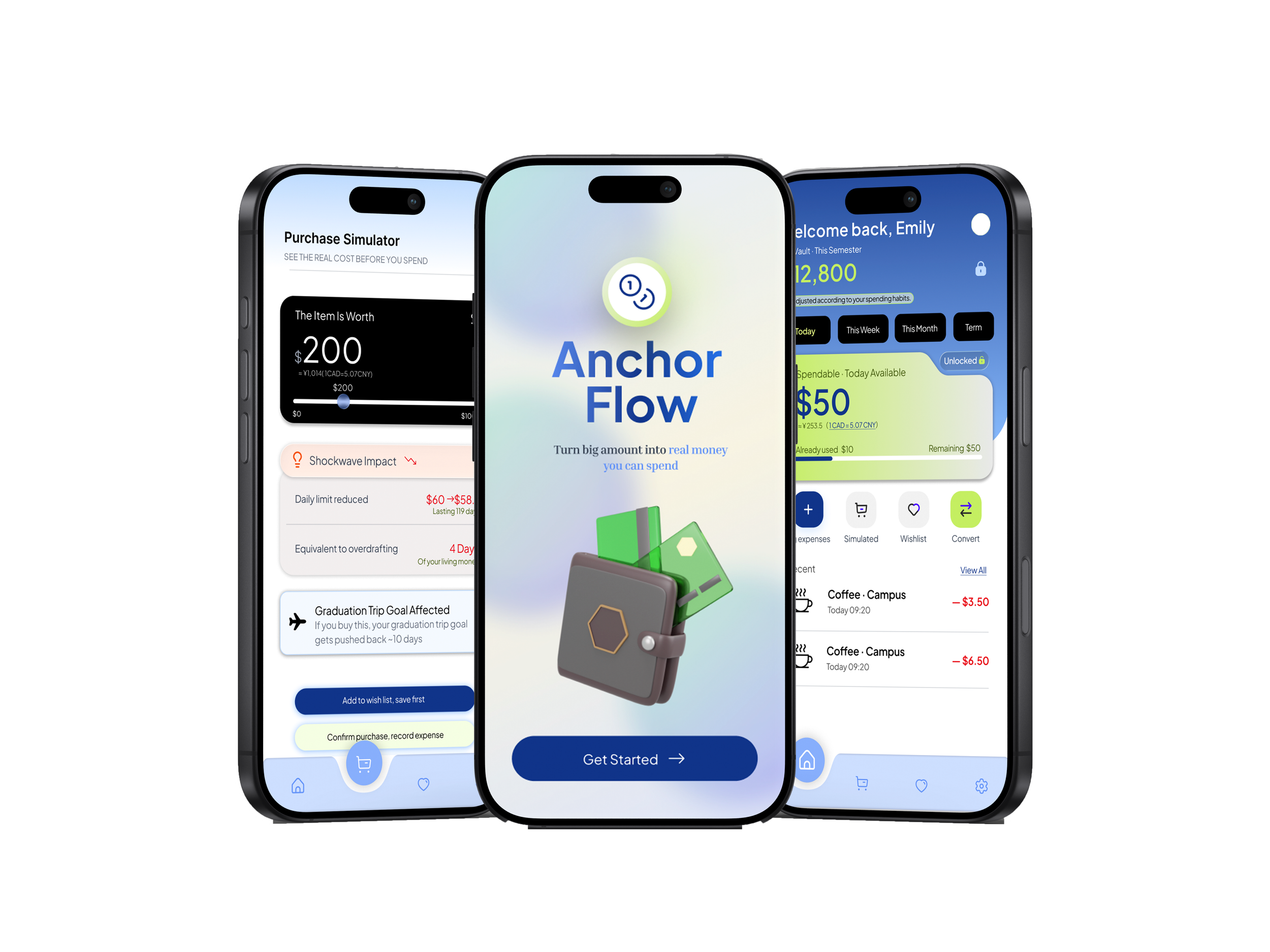
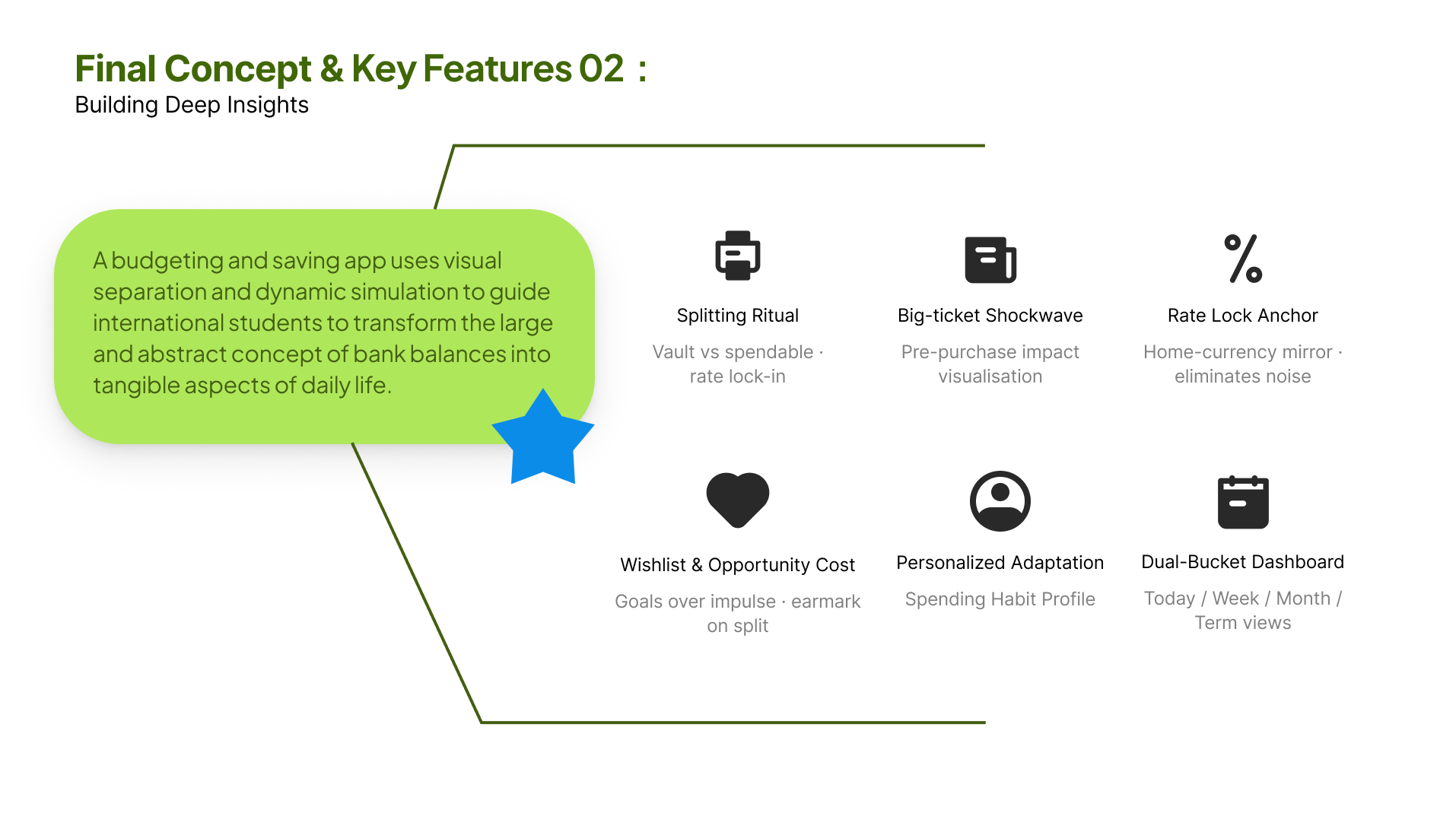
A budgeting and saving app uses visual separation and dynamic simulation to guide international students to transform the large and abstract concept of bank balances into tangible aspects of daily life.
Time
7 month
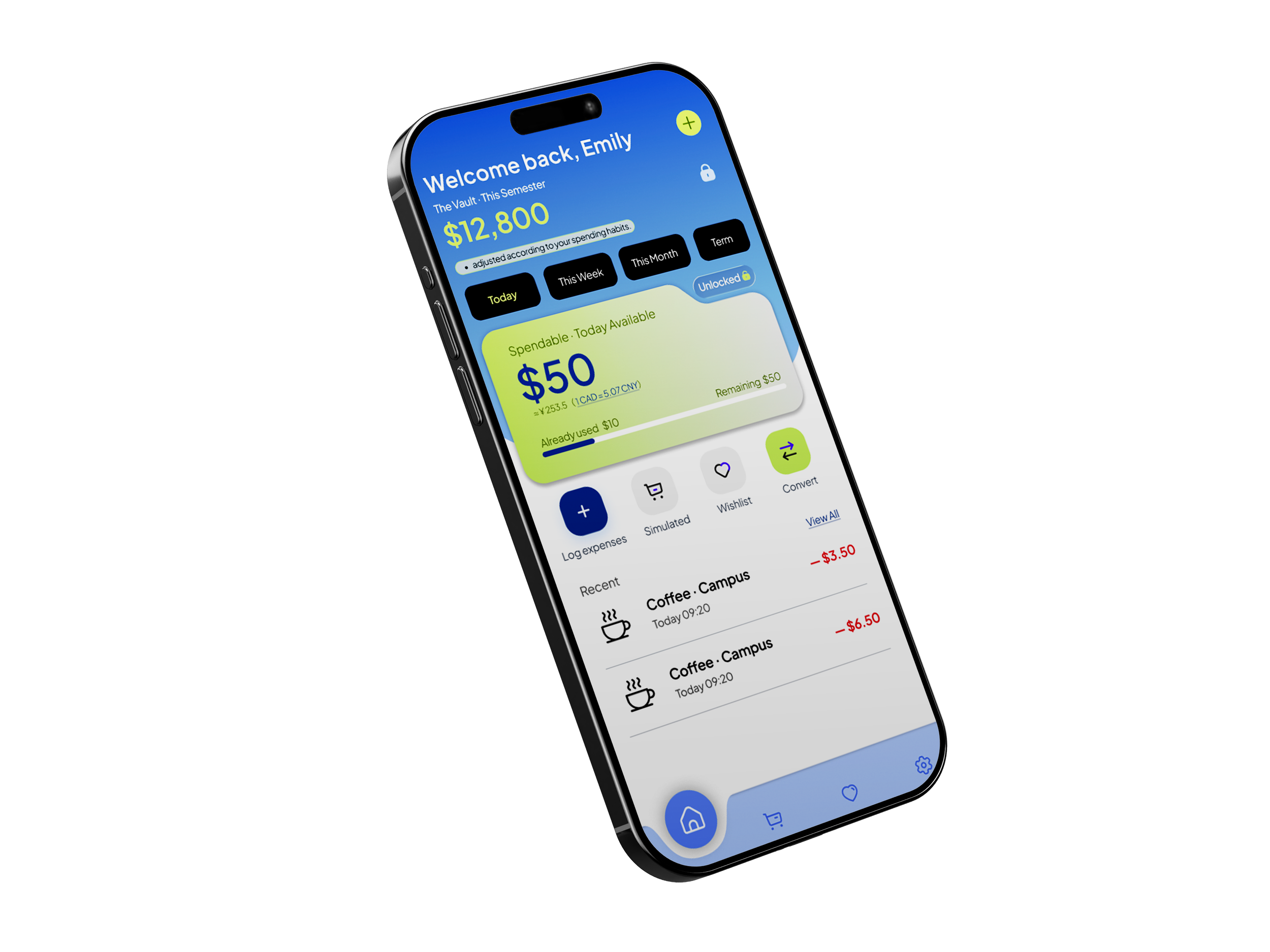
WHY — THE PROBLEM
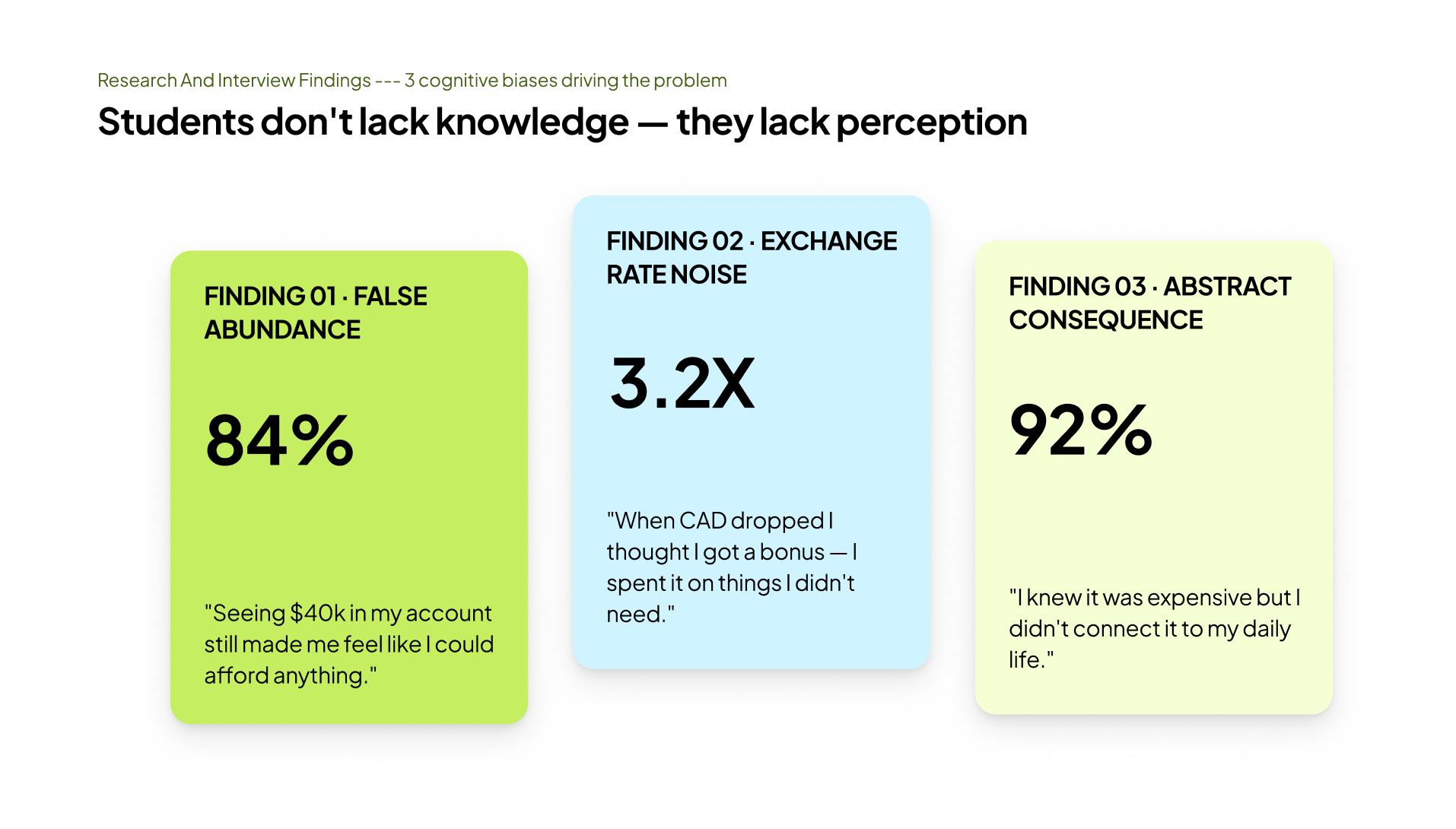
It all started with a question that had been bothering me for four years. “Money Management”
“64% of GenZ they are worried about.....”
The number of international students affected by budget overruns is expected to increase by 12% to 18% between 2023 and 2025.
WHAT — THE SOLUTION
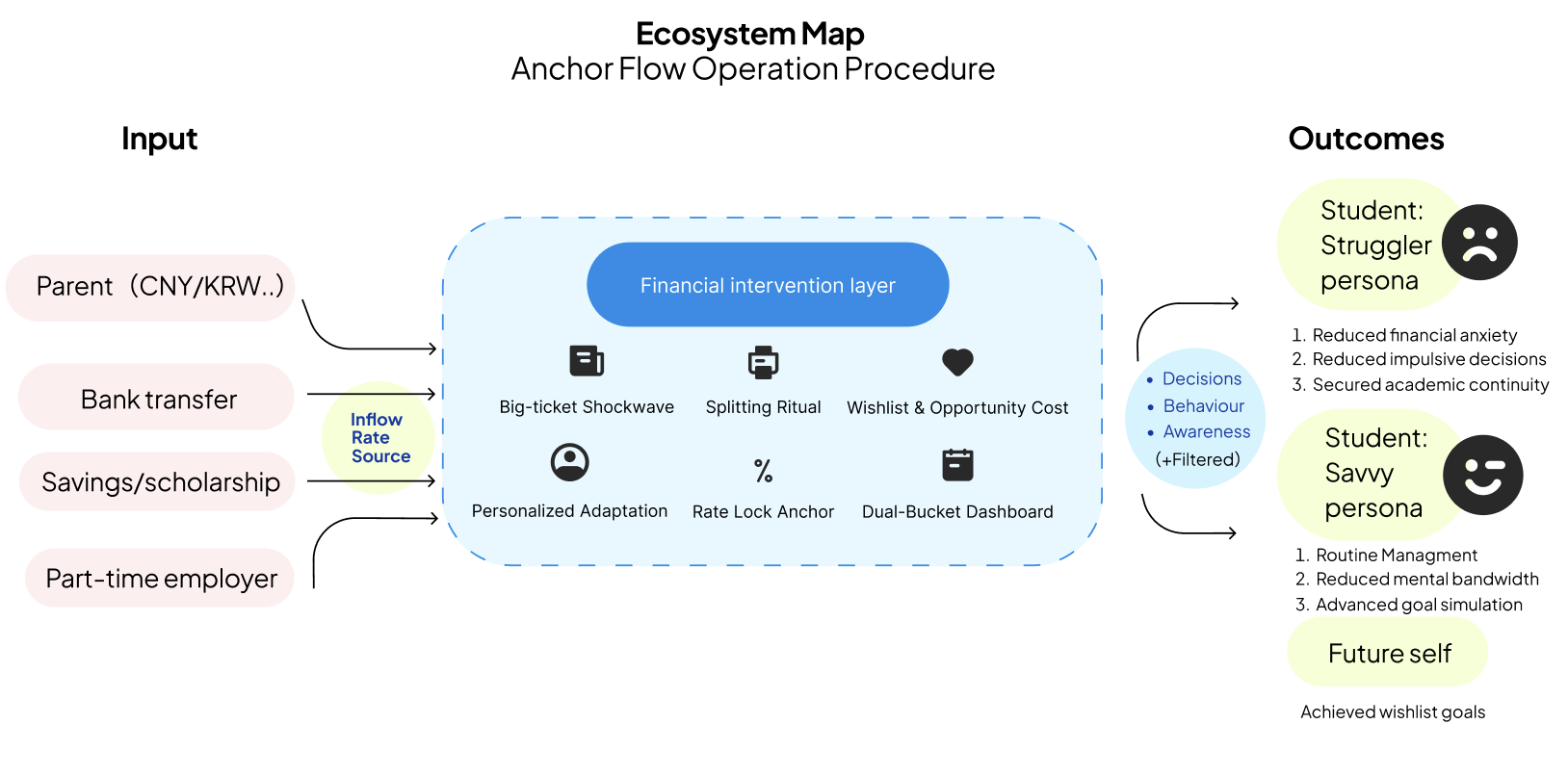
Anchor Flow Operation Procedure
I created an Ecosystem Map to show how parents' financial inputs are transformed into students' filtered decisions through your intervention layer (Anchor flow).
01
02
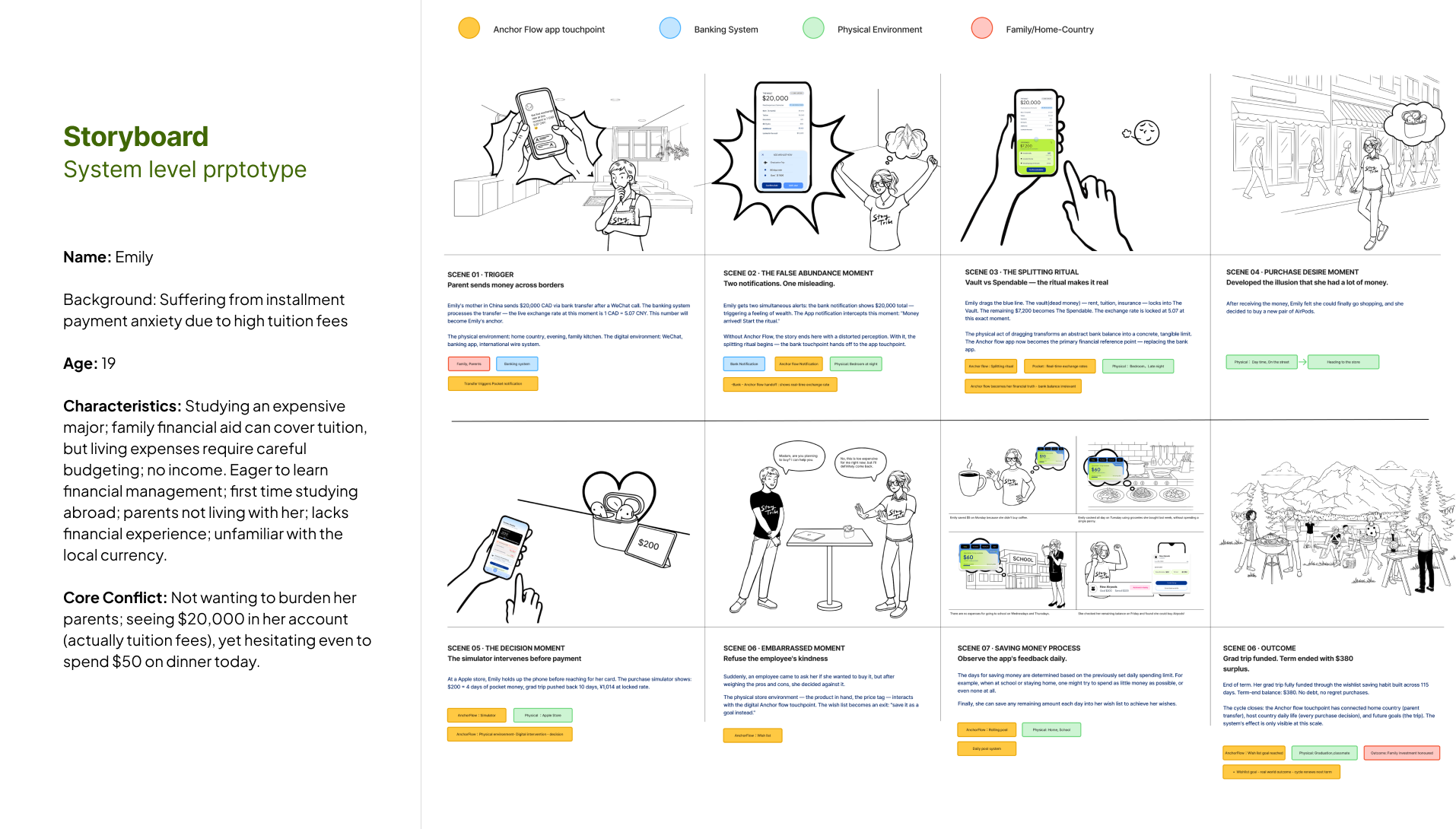
Story Board:"A Walkthrough of the Anchor Flow: Protecting Future Intent"
The following storyboard tracks a typical user during a life transition, demonstrating how Anchor Flow intervenes at key moments in daily decision-making. From the initial moment of receiving a large sum of capital to the decision-making instant faced with immediate temptation, this narrative showcases the actual operation of "anchor feedback" and "shockwave simulation." This journey is not merely a change of interface, but a cognitive reshaping process where the user's mindset shifts from "passive anxiety" to "active control," reflecting the system's core value in safeguarding future goals.
PROBLEM 01
Cognitive Bias (The Illusion of Wealth):
Large total amounts in bank accounts mask true daily purchasing power.
SOLUTION 01
The Splitting Ritual & Personalized Adaptation
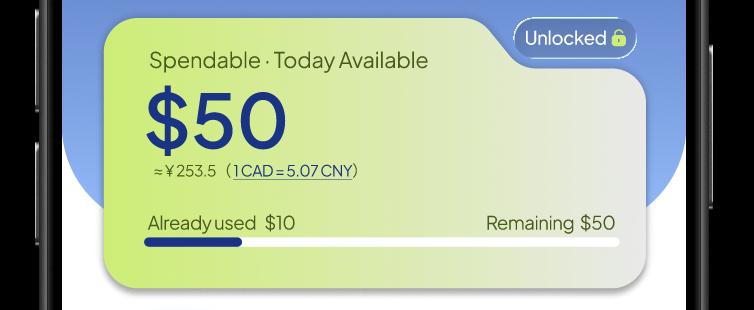
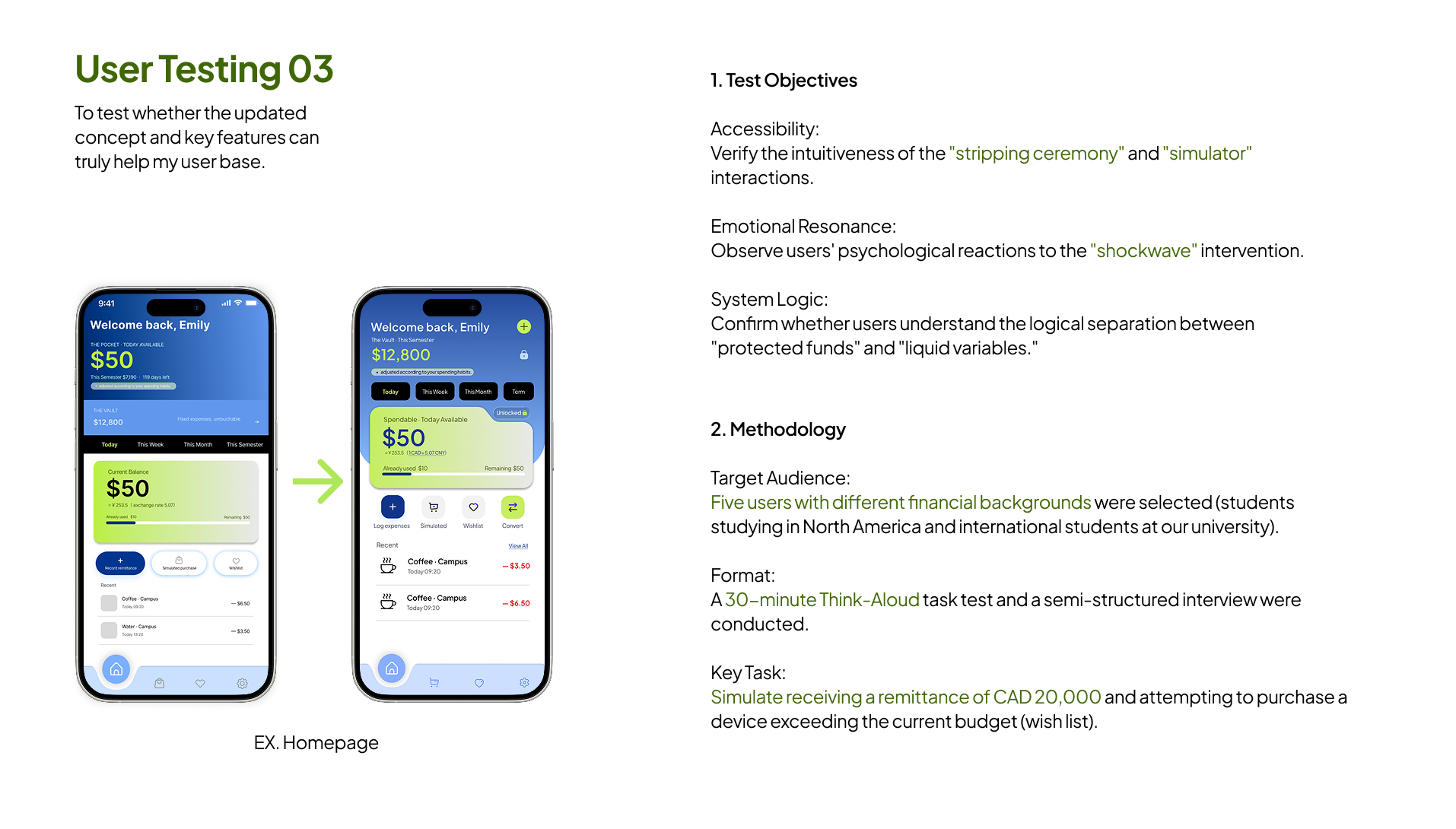
Record your spending habit profile to help demonstrates how a "vault" physically strips away dead money.
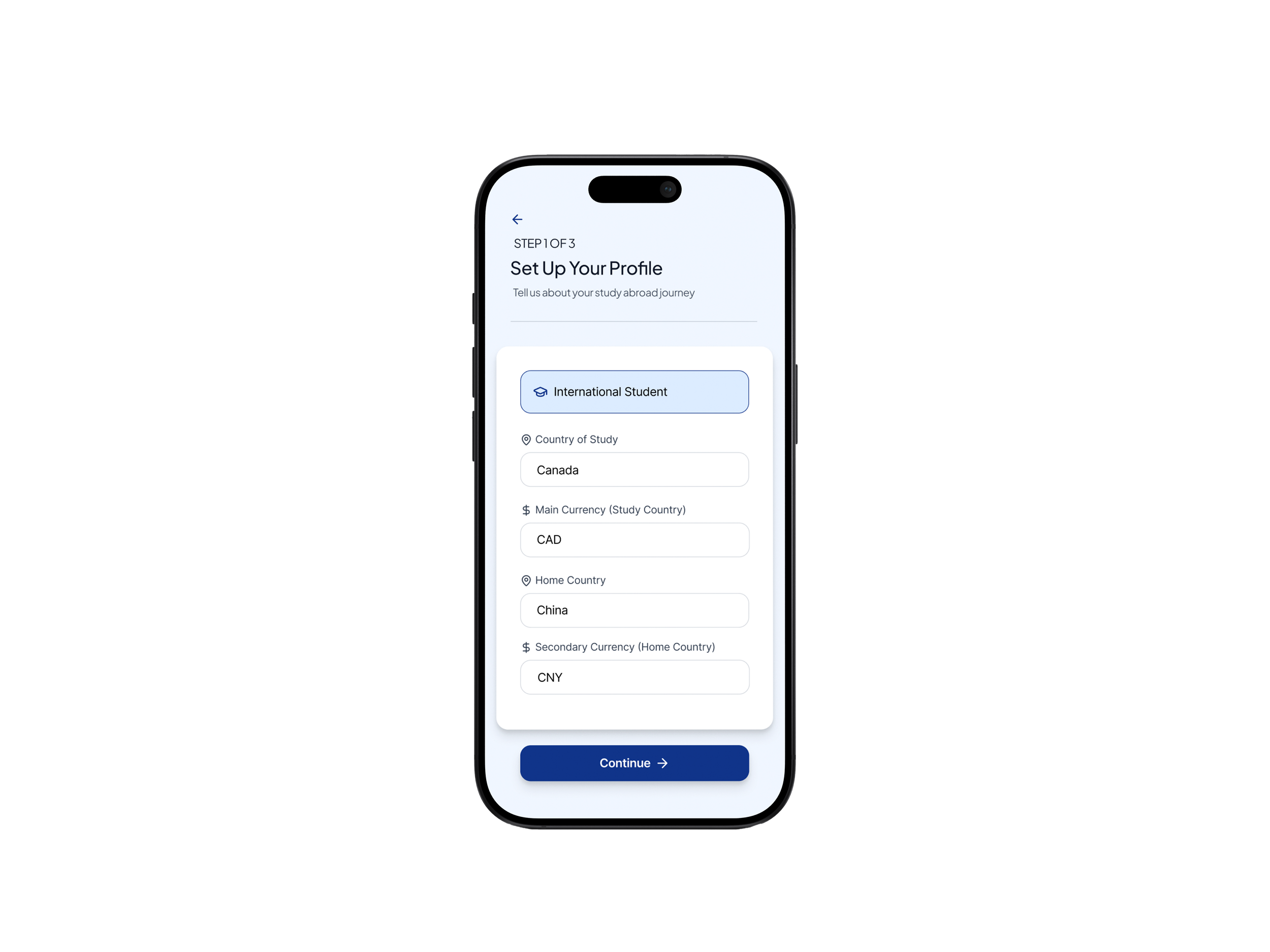
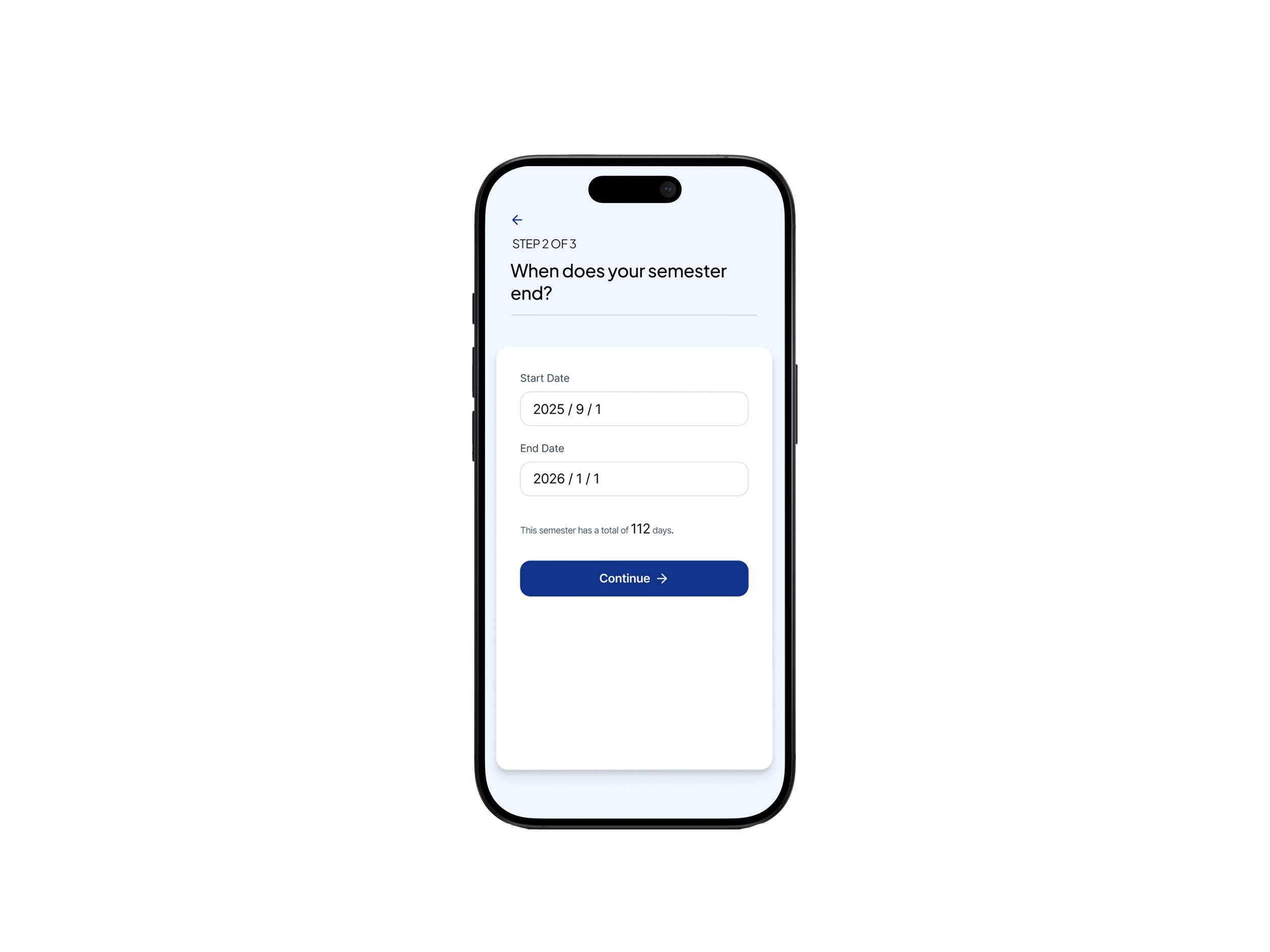
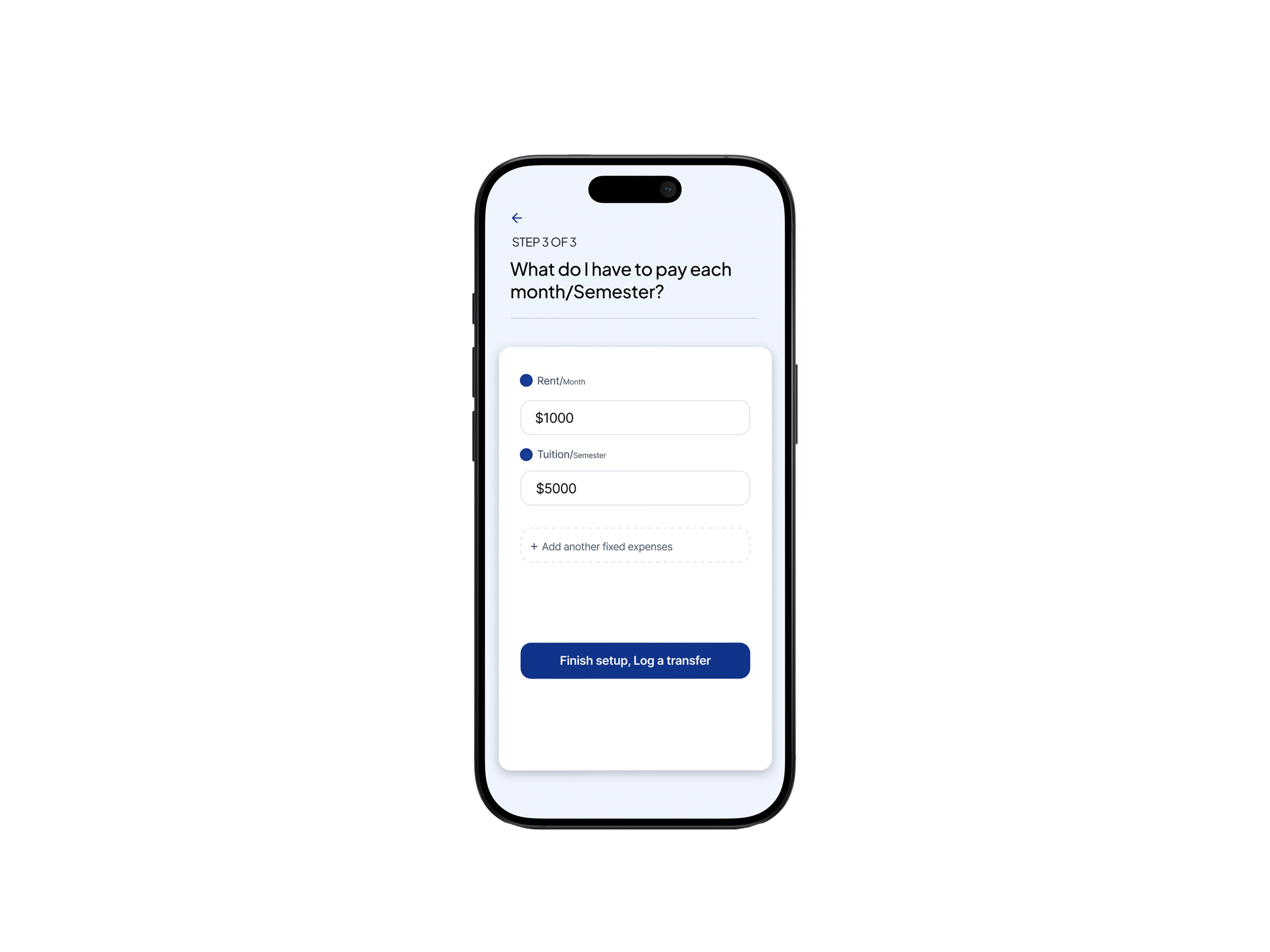
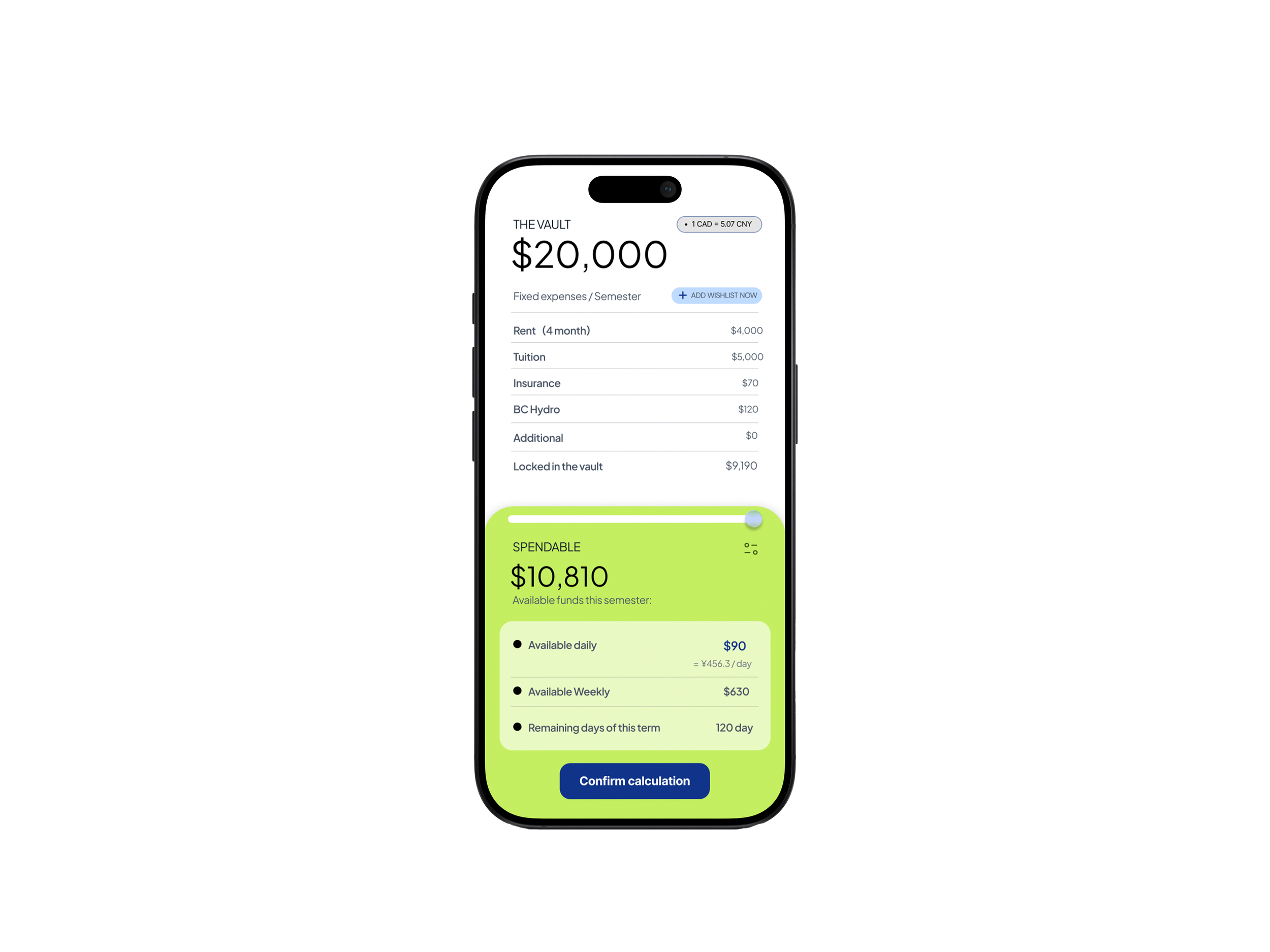
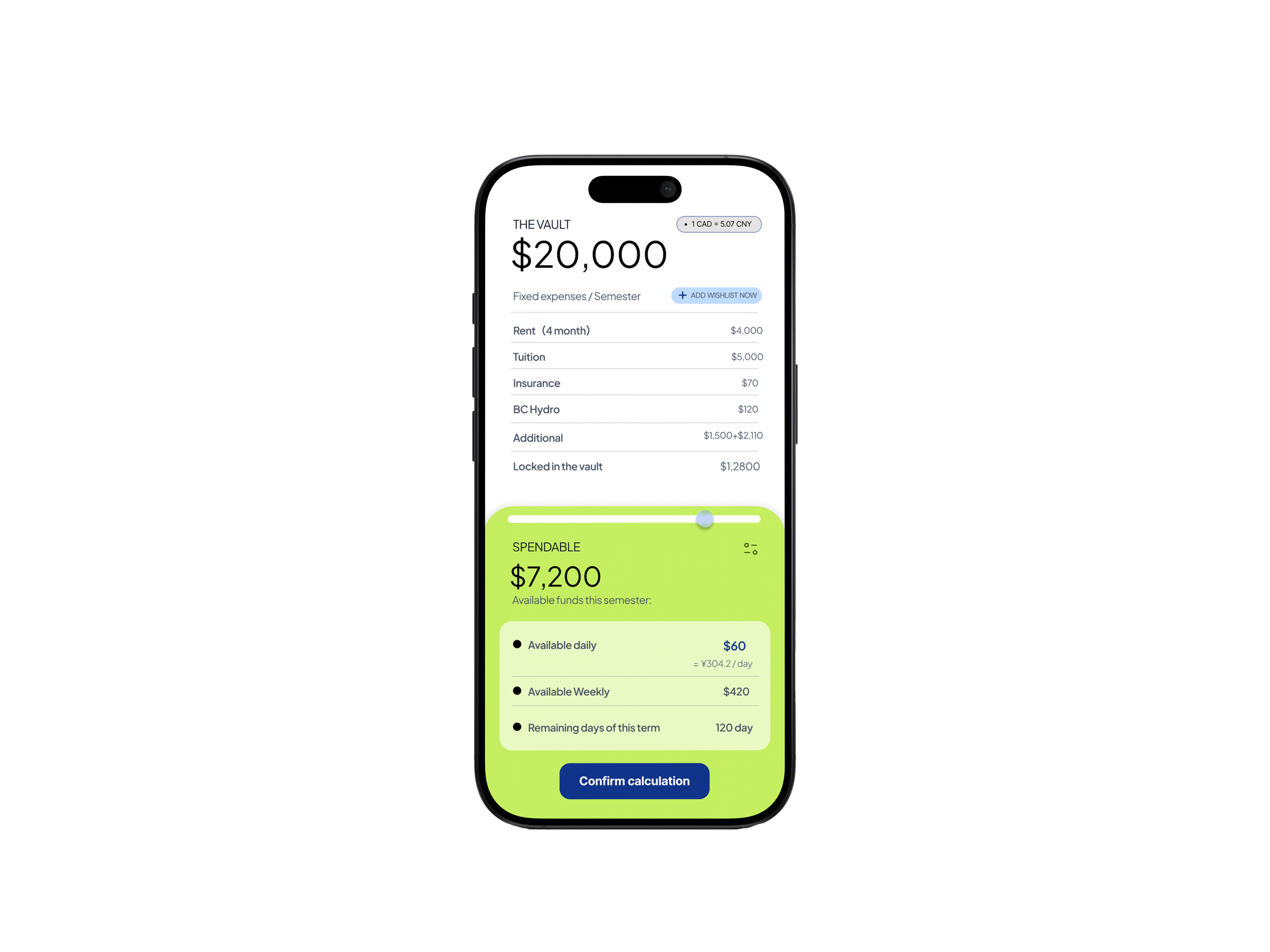
Personalized Adaptation:
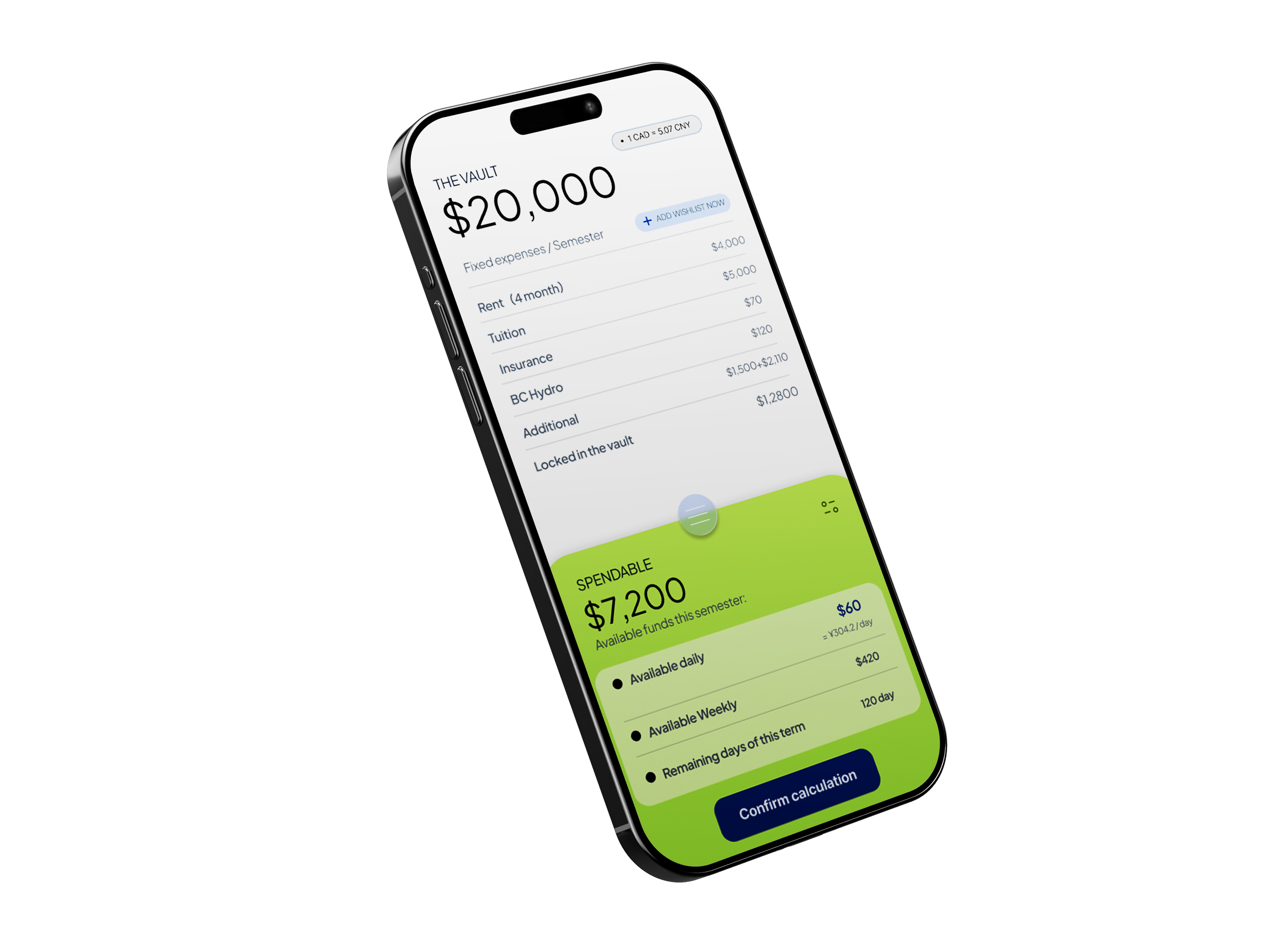
The exchange rate is determined by selecting the language, study abroad country, and home country, and daily expenses are calculated by manually adding the required monthly or semester savings into the spitting ritual.
Splitting Ritual:
Multi-source $20k CAD · drag to split · Manually divide funds into spendable and non-spendable (including monthly/semester essentials like tuition or rent). Add wish list items now or reserve for later—doing it during the split shows trade-offs immediately and avoids later surprises to daily spending.
PROBLEM 02
The Global-Local Gap:
A lack of connection and responsibility between cross-border remittances and the pleasure of local consumption.
SOLUTION 02
Rate Lock Anchor
Quickly check exchange rates and exchange currency.
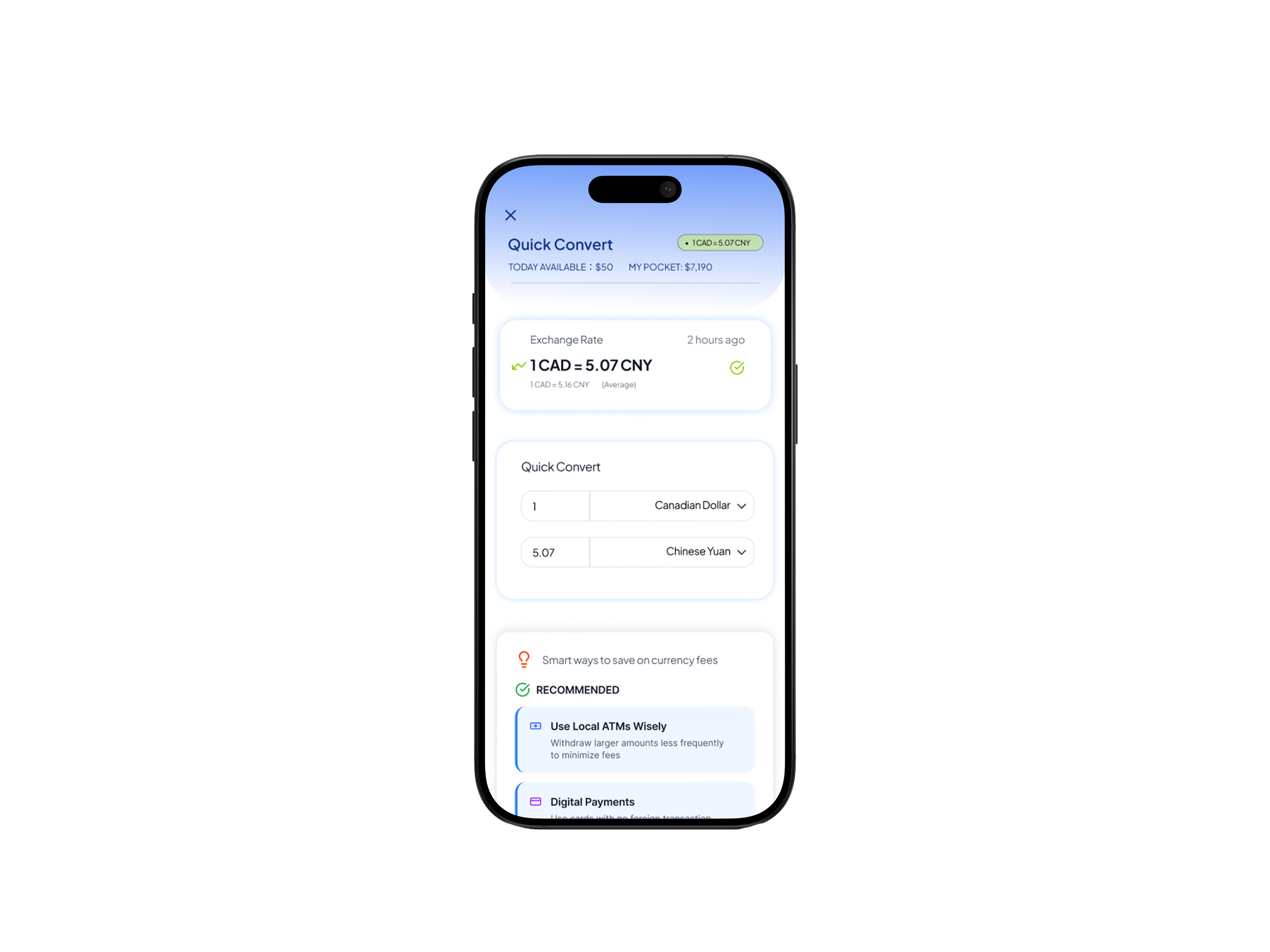
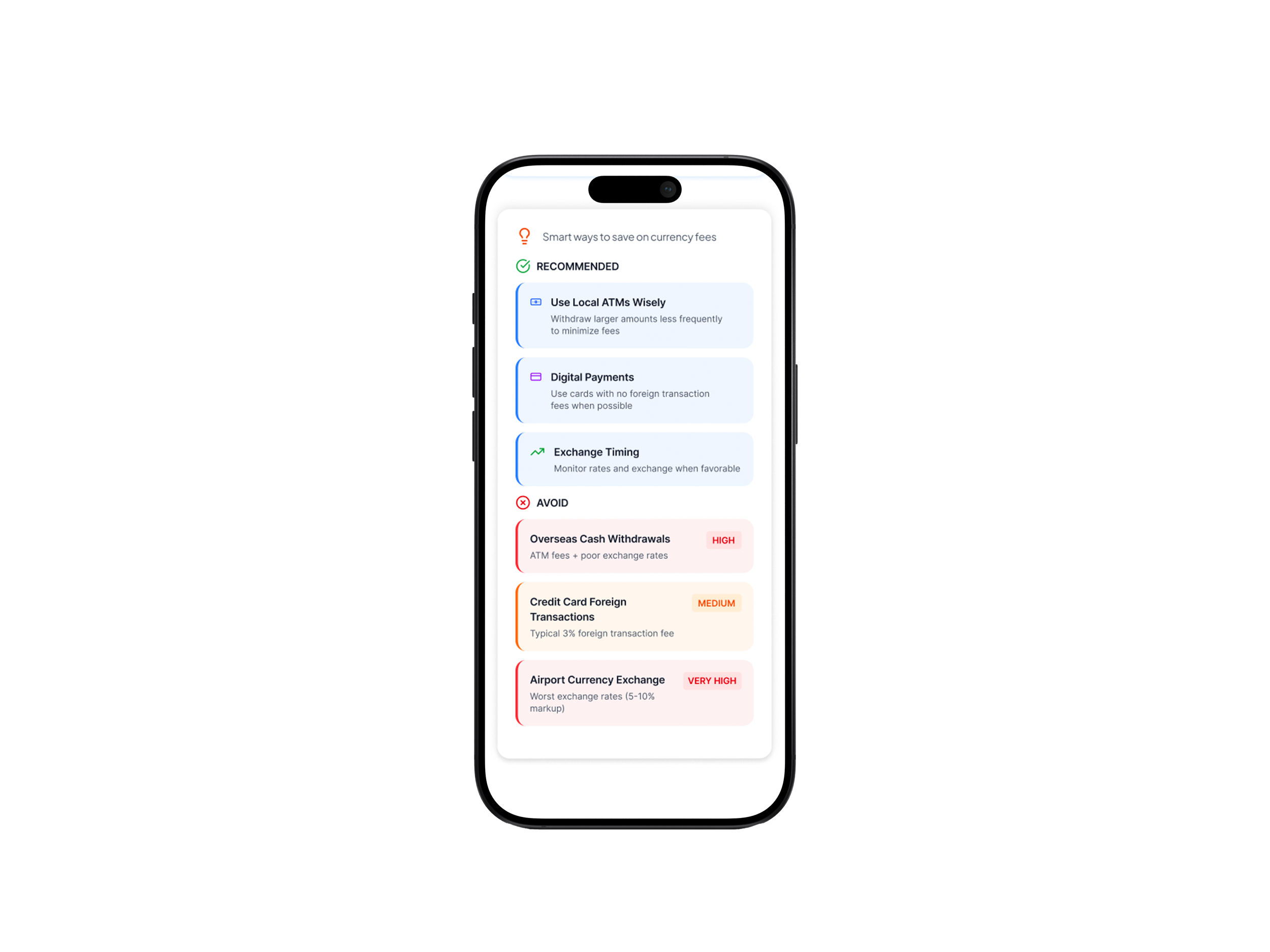
Quick Conversion:
On the homepage, you can open the conversion page to view the current exchange rate for subsequent money transfers. You can also manually convert amounts by selecting the currency for instant and accurate results. The app will also suggest where to exchange cash and where to avoid exchanging—for example, it will remind you not to exchange at the airport, as airport exchange points are usually expensive and offer unfavorable rates—so you can save money before traveling or after arriving at your destination.
PROBLEM 03
The dilemma and regret during the purchase process:
Because it's difficult to control the urge to buy and one must face unknown consequences.
SOLUTION 03
Big Ticket Shockwave
Pre-purchase influence visualization features
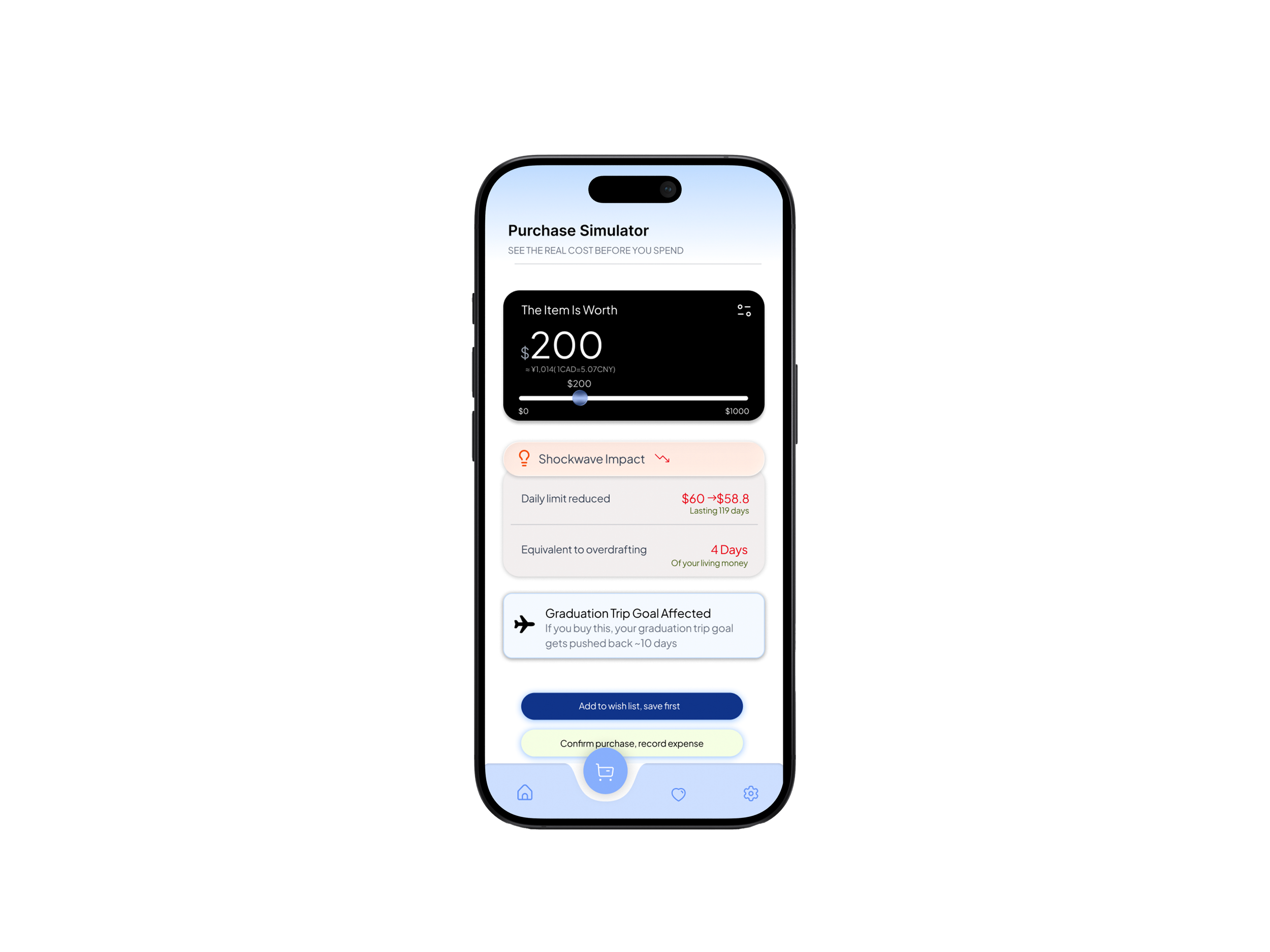
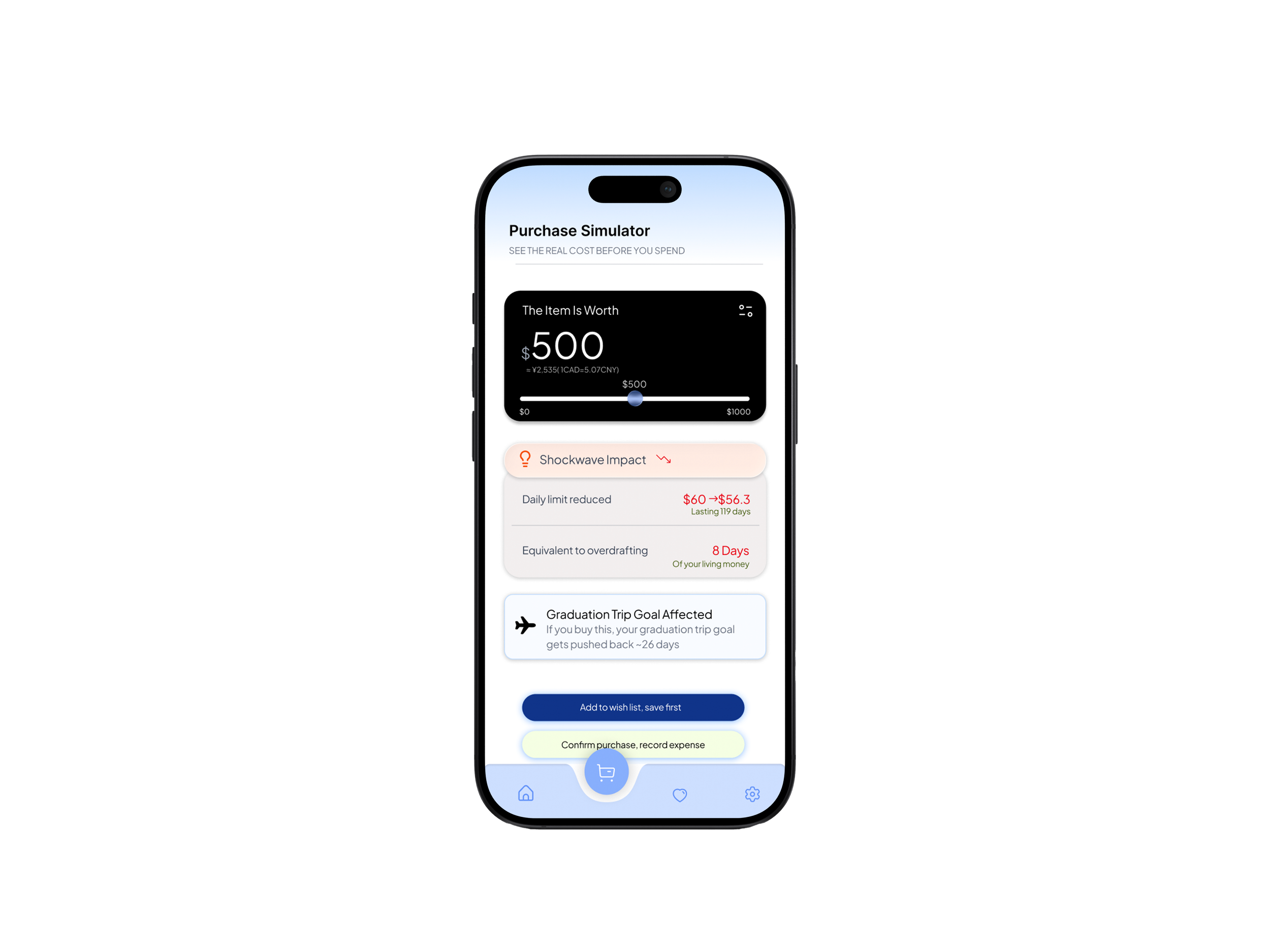
Pre- Purchase Simulator:
The pre-purchase impact visualization feature influences users' decisions before checkout by presenting clear, numerical data (showing how much their daily expenses will decrease if they make the purchase, and the equivalent of saving on expenses for several days).
PROBLEM 04
The Emotional Gap & Invisible Opportunity Cost:
In the current financial ecosystem, each transaction is viewed as an isolated event. It is impossible to establish a real-time logical connection between this behavior and a significant long-term goal (such as a graduation trip).
Current situation: The decrease in account balance is silent; it's painless.
Consequences: Users unknowingly erode their future savings, only to find themselves unable to afford their originally planned aspirations at the end of the semester.
SOLUTION 04
Add Your Wish List
Every dollar was given a "purpose".
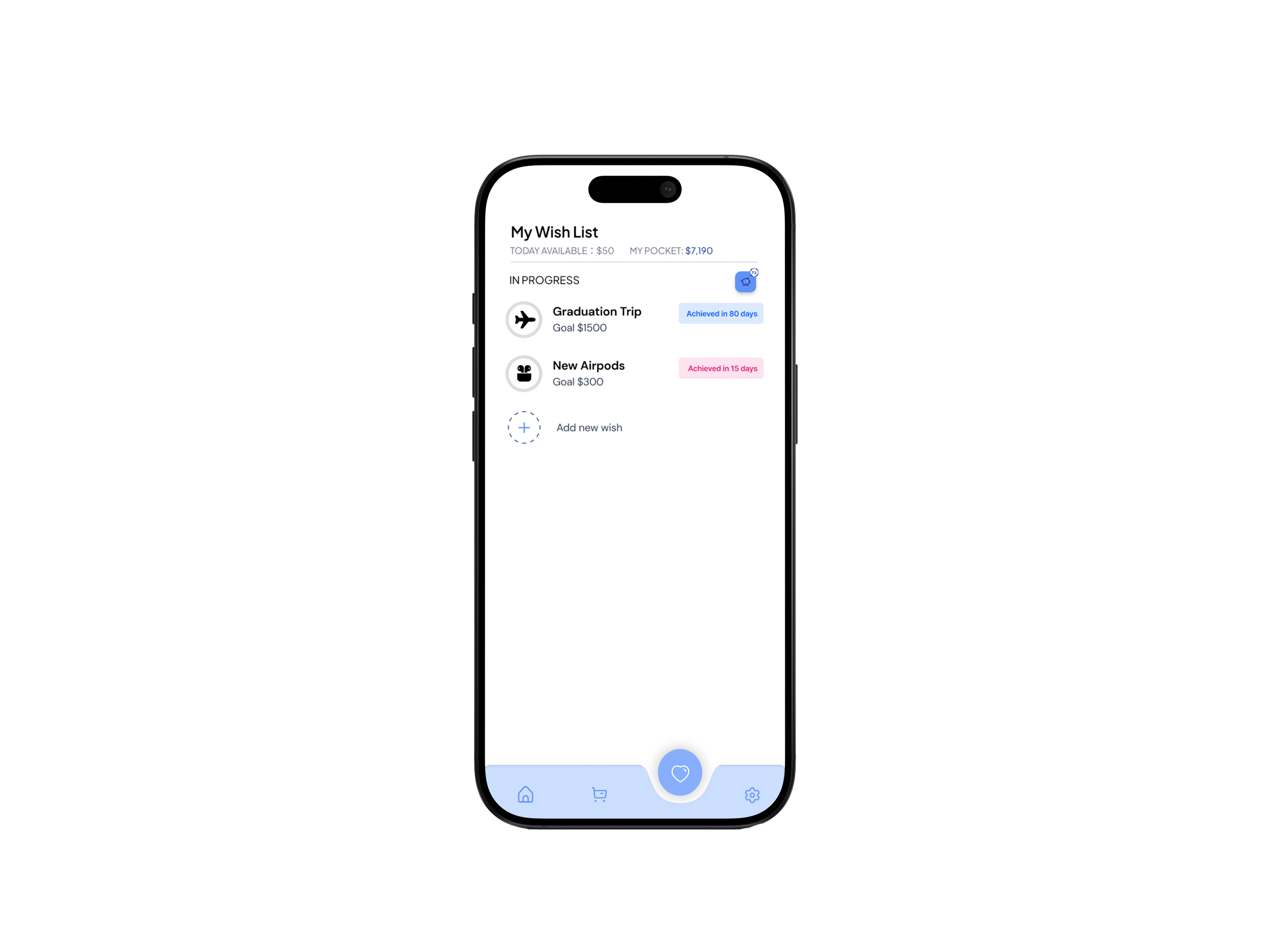
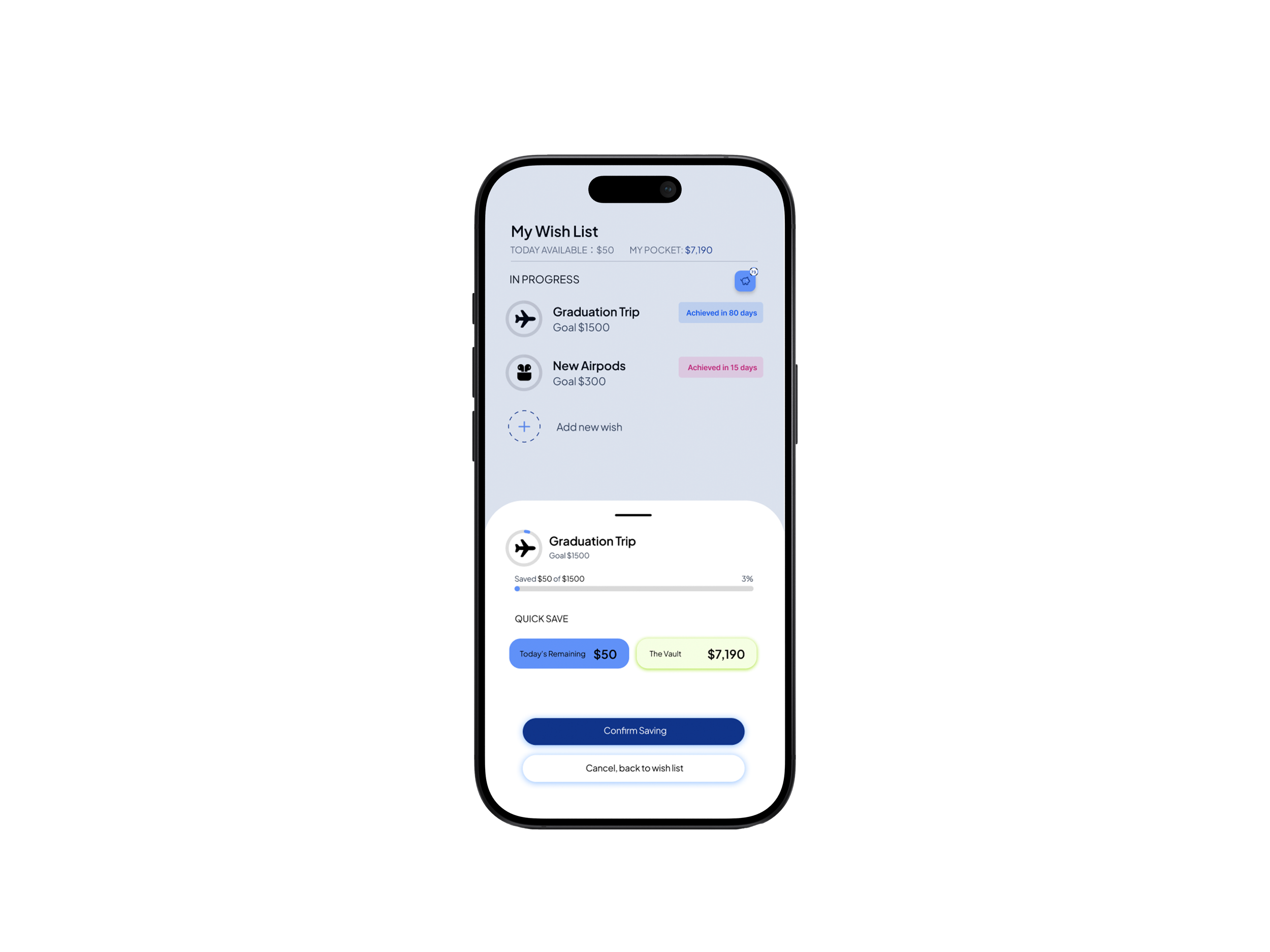
Wish List Anchored Feedback
The wish list interface is not just a record of progress, but also a form of behavioral intervention: it transforms the tedious act of saving into a sense of accomplishment in achieving goals, and uses a "shockwave simulation" to visualize the opportunity cost of impulsive consumption, thus establishing a psychological barrier against immediate temptations.
HOW — THE PROCESS
Research, Ideation & Iteration
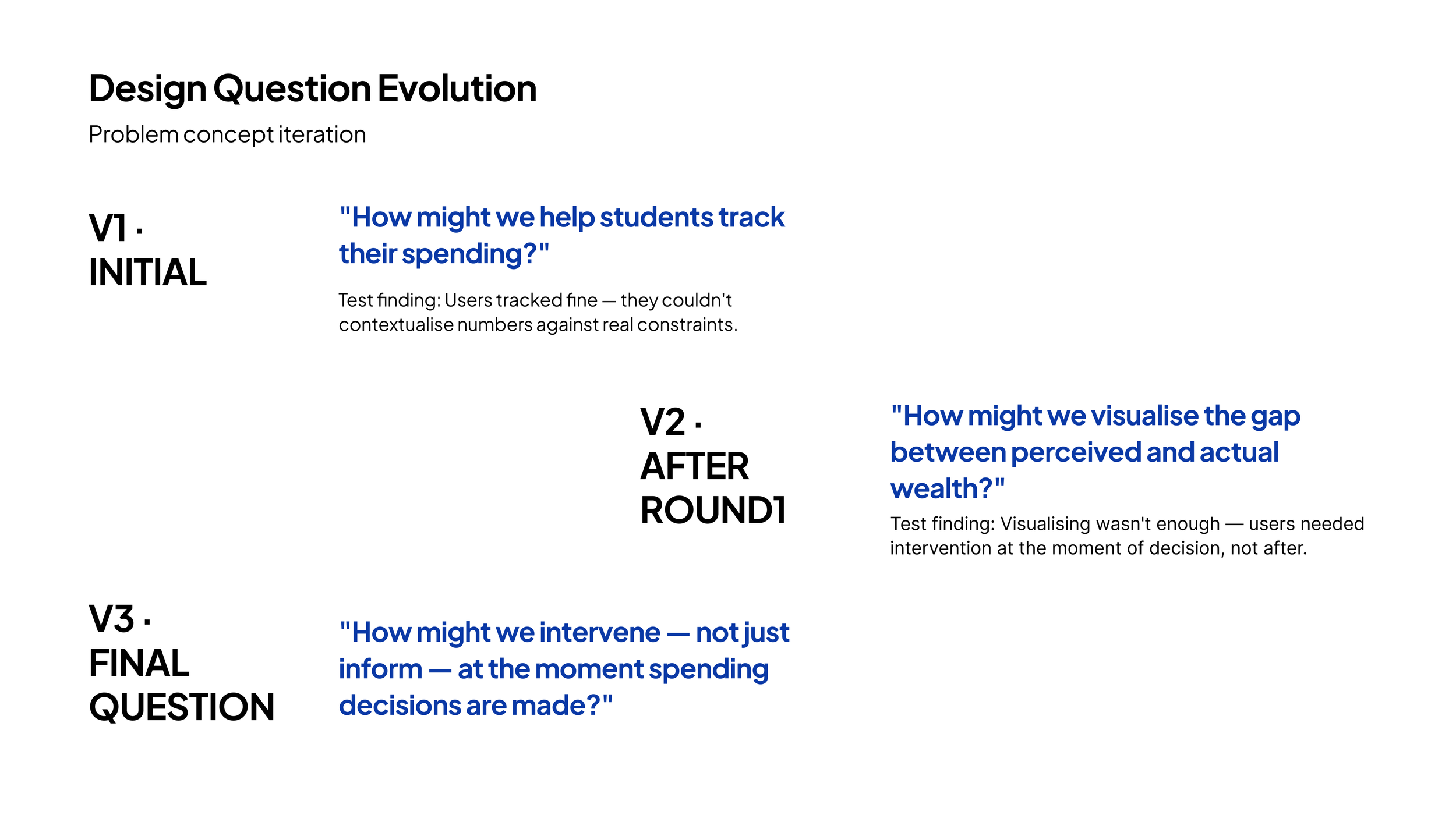
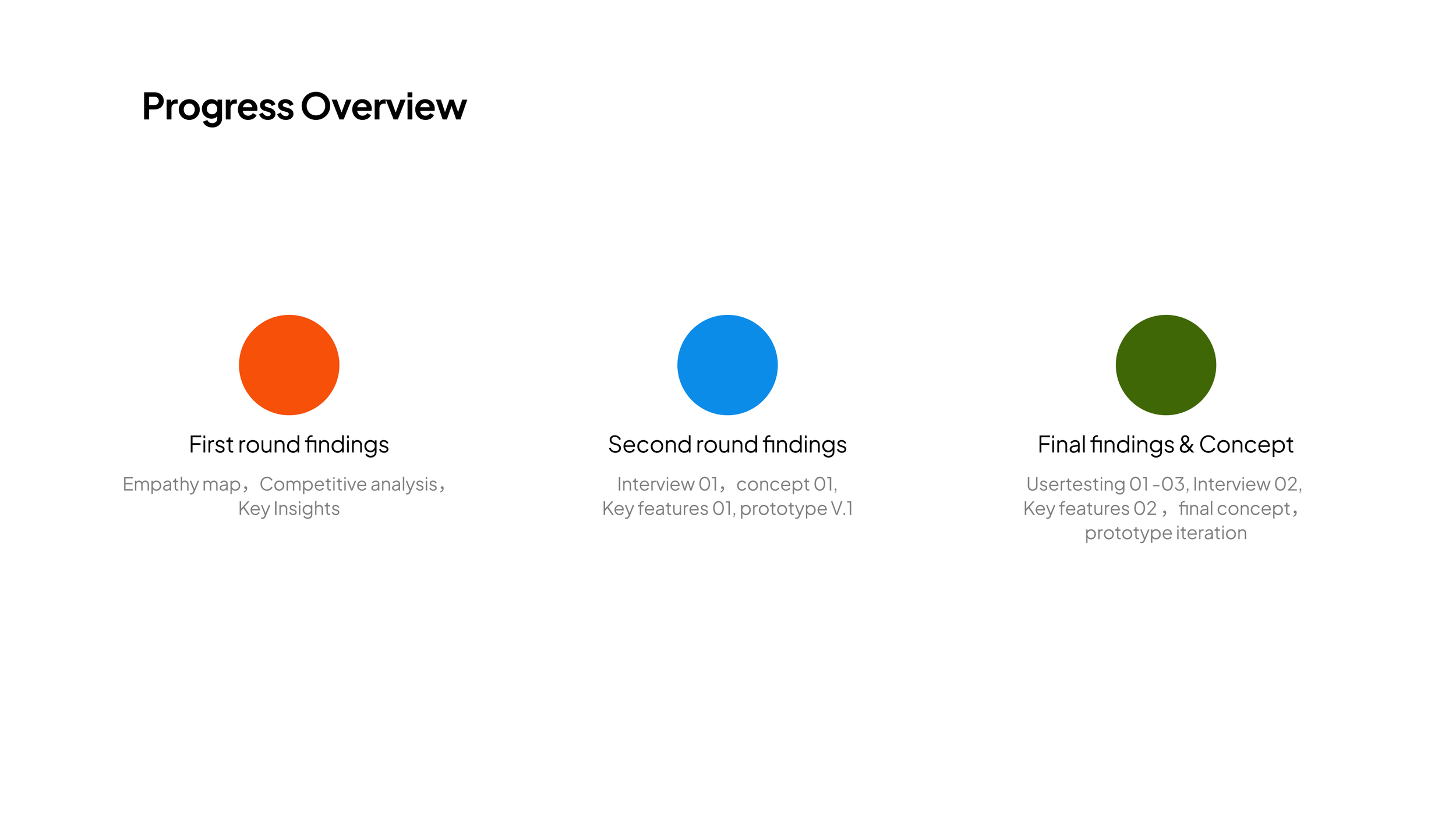
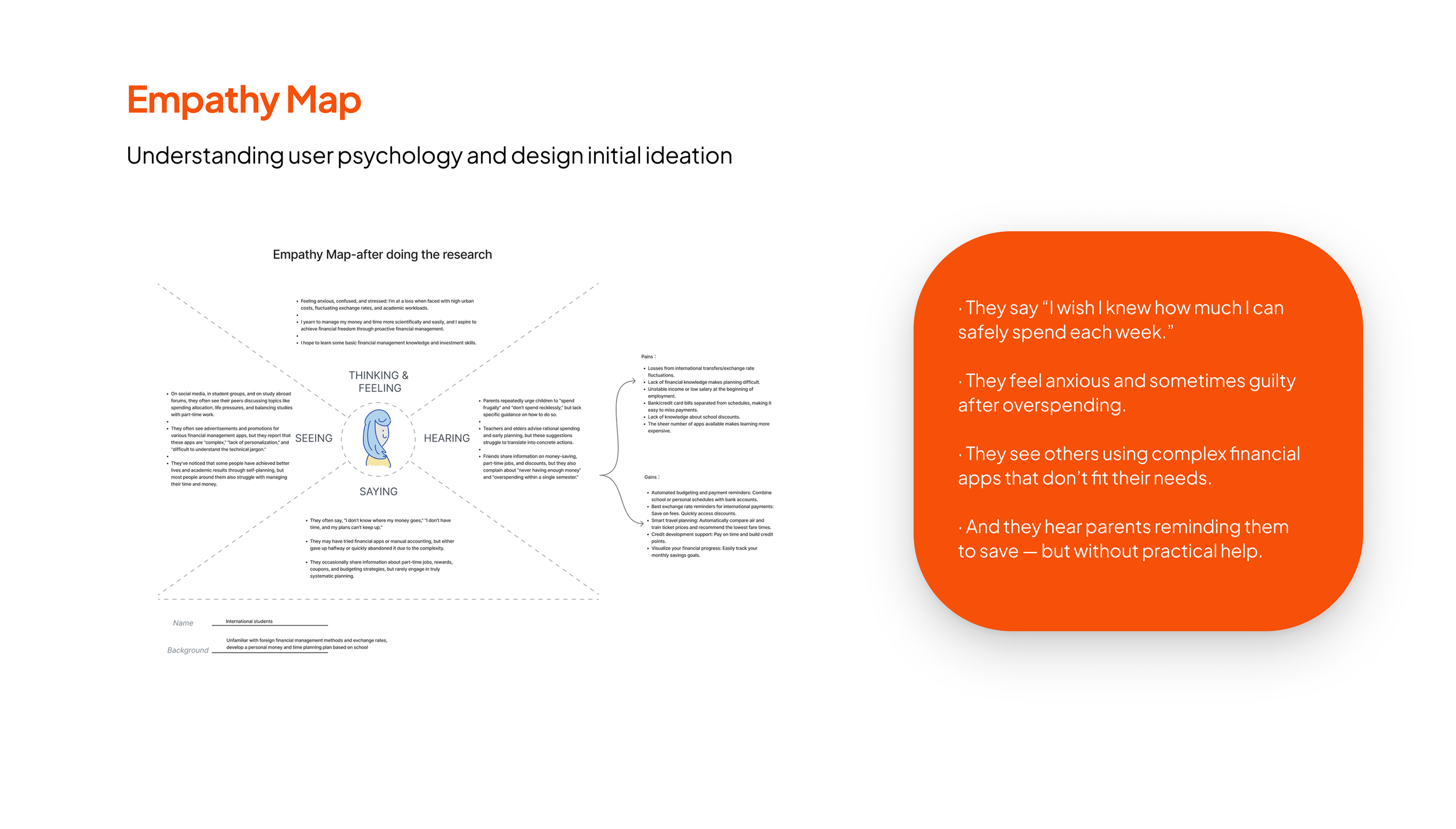
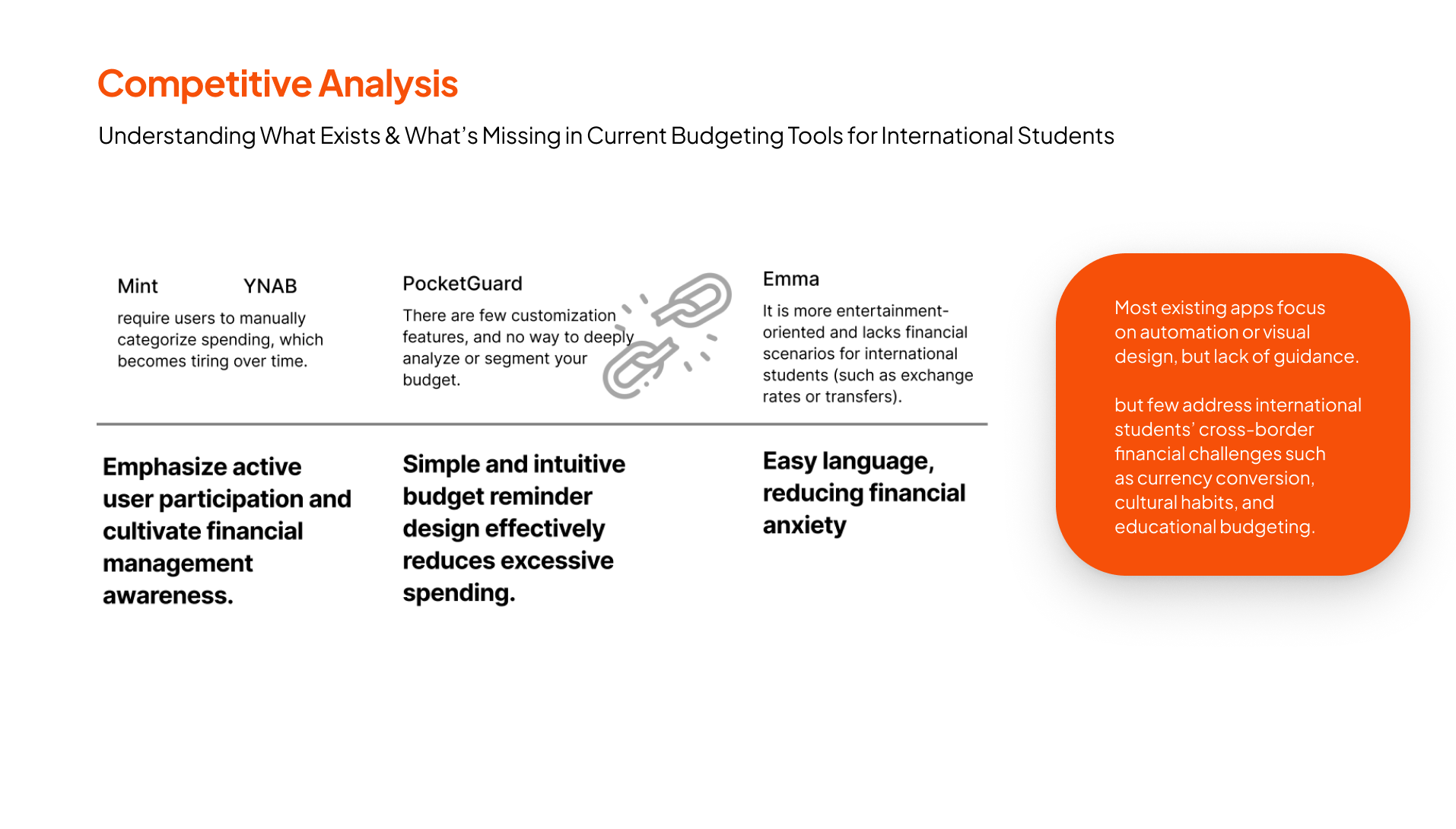
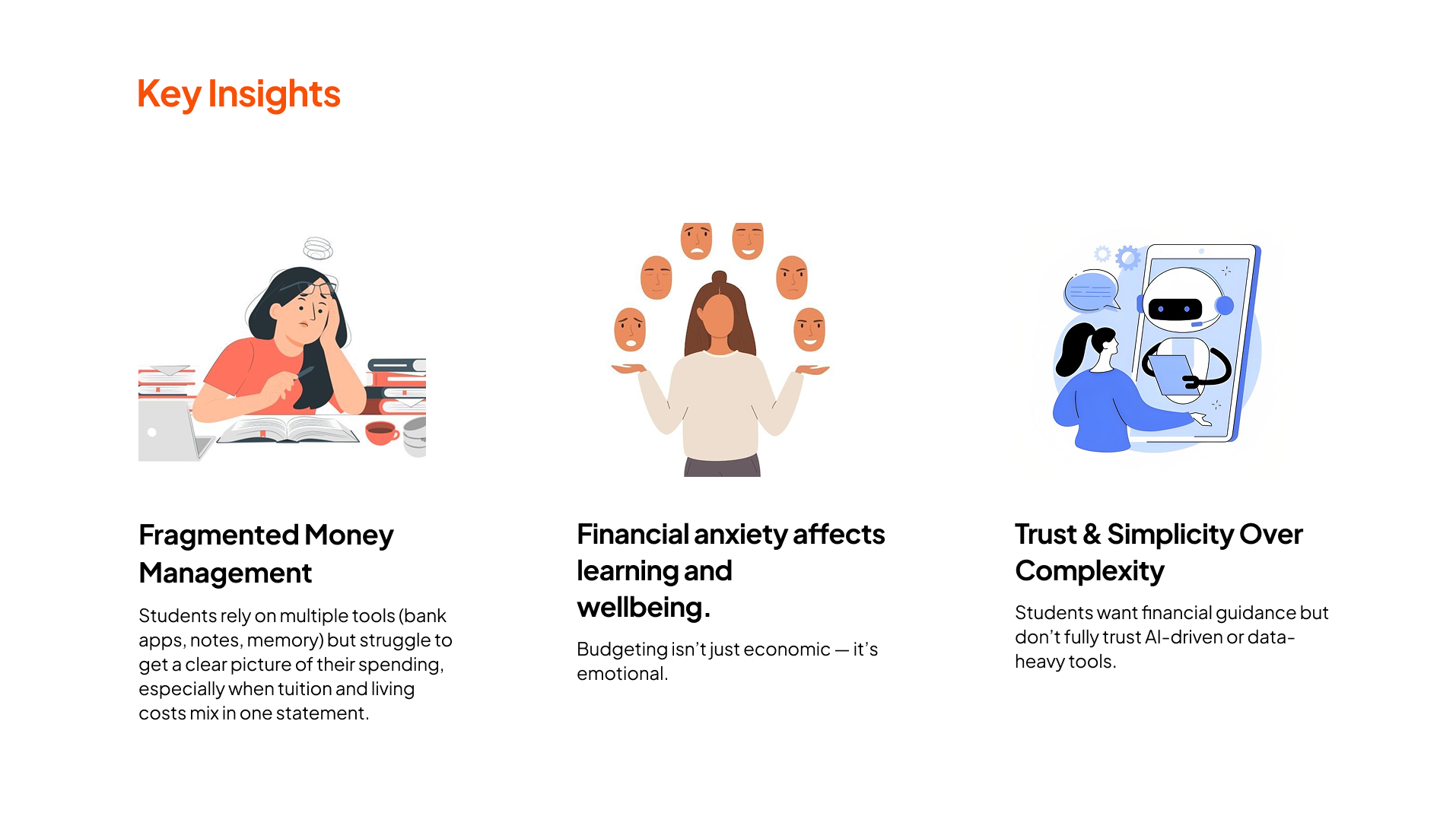
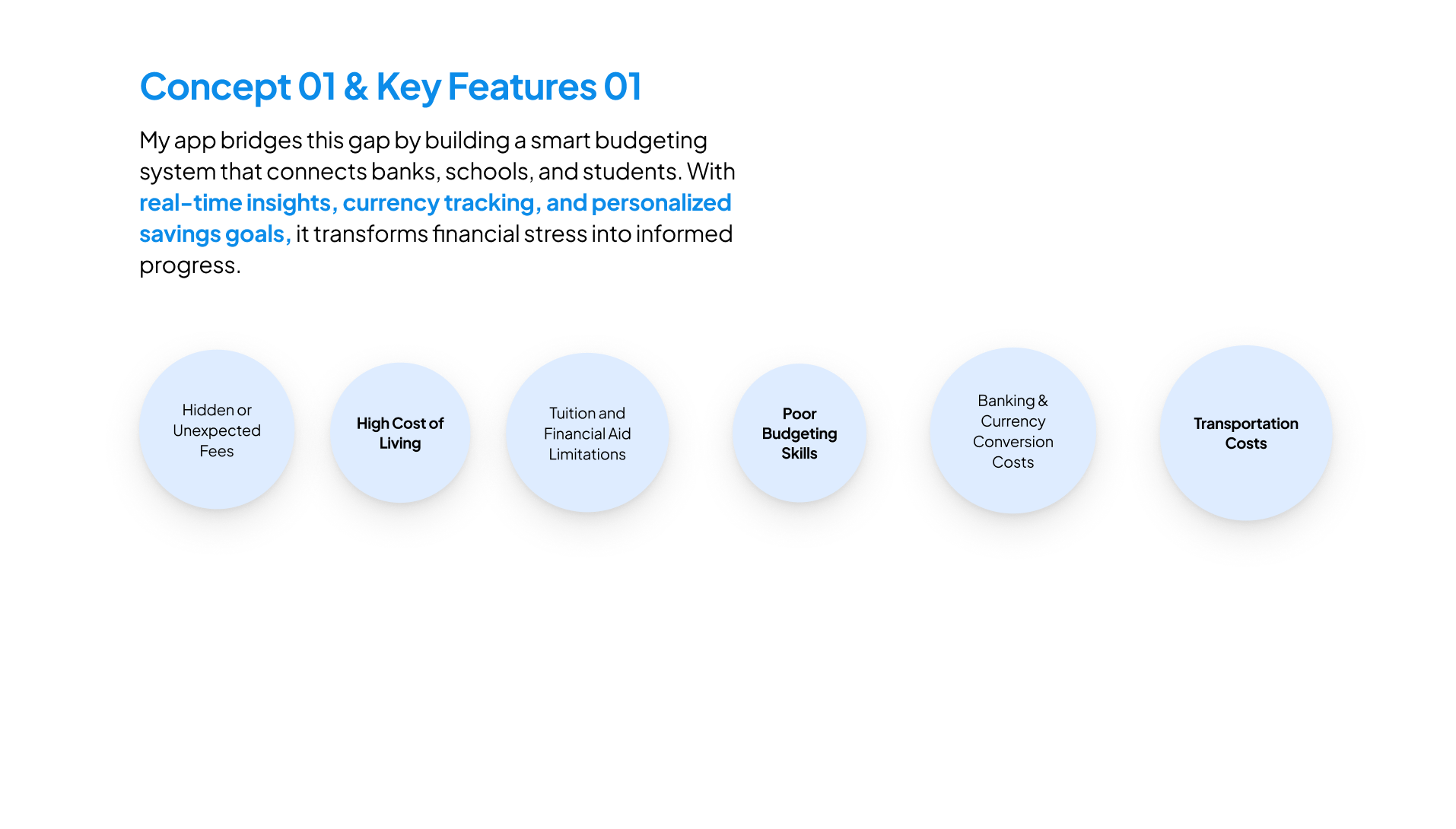
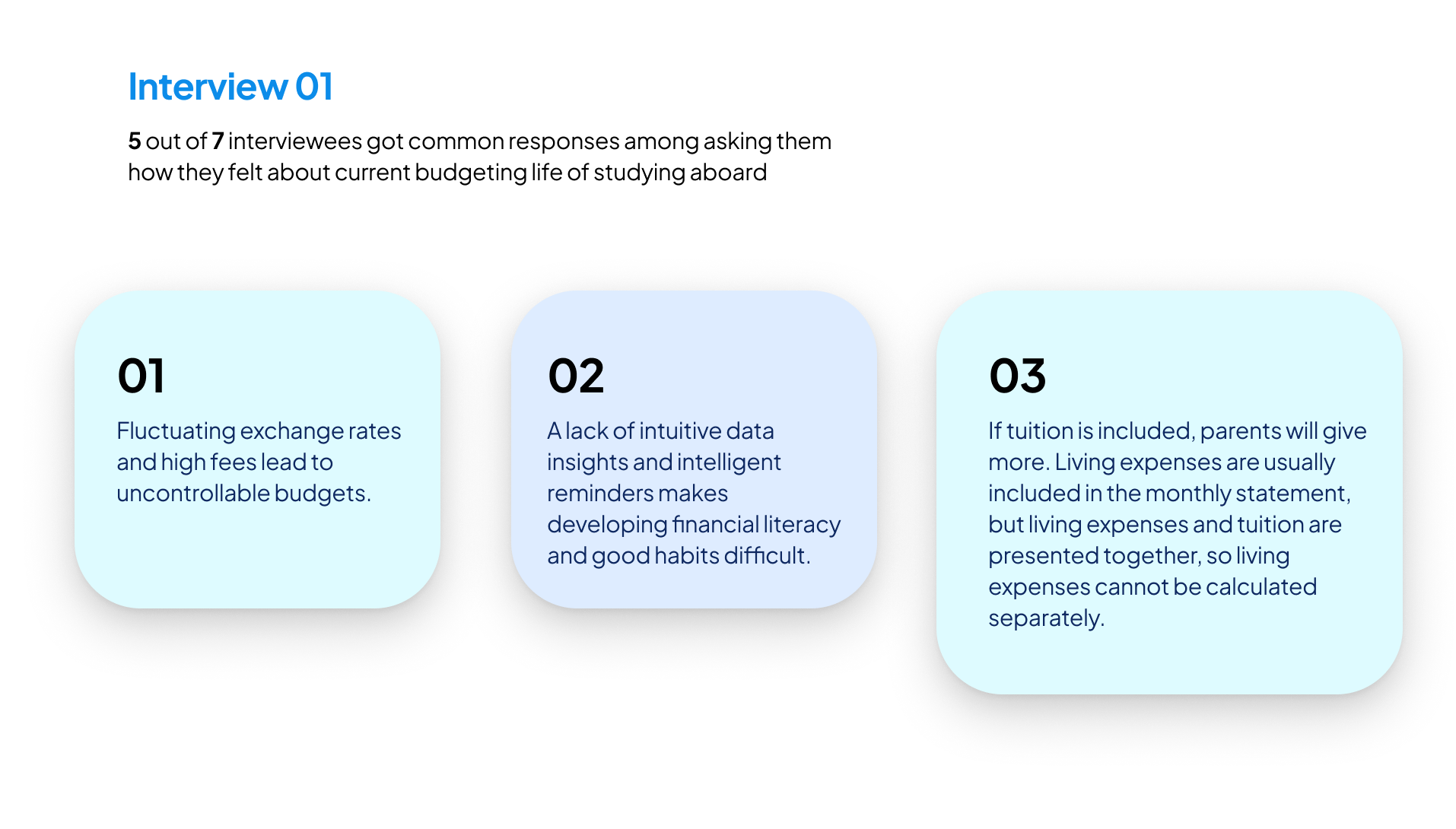
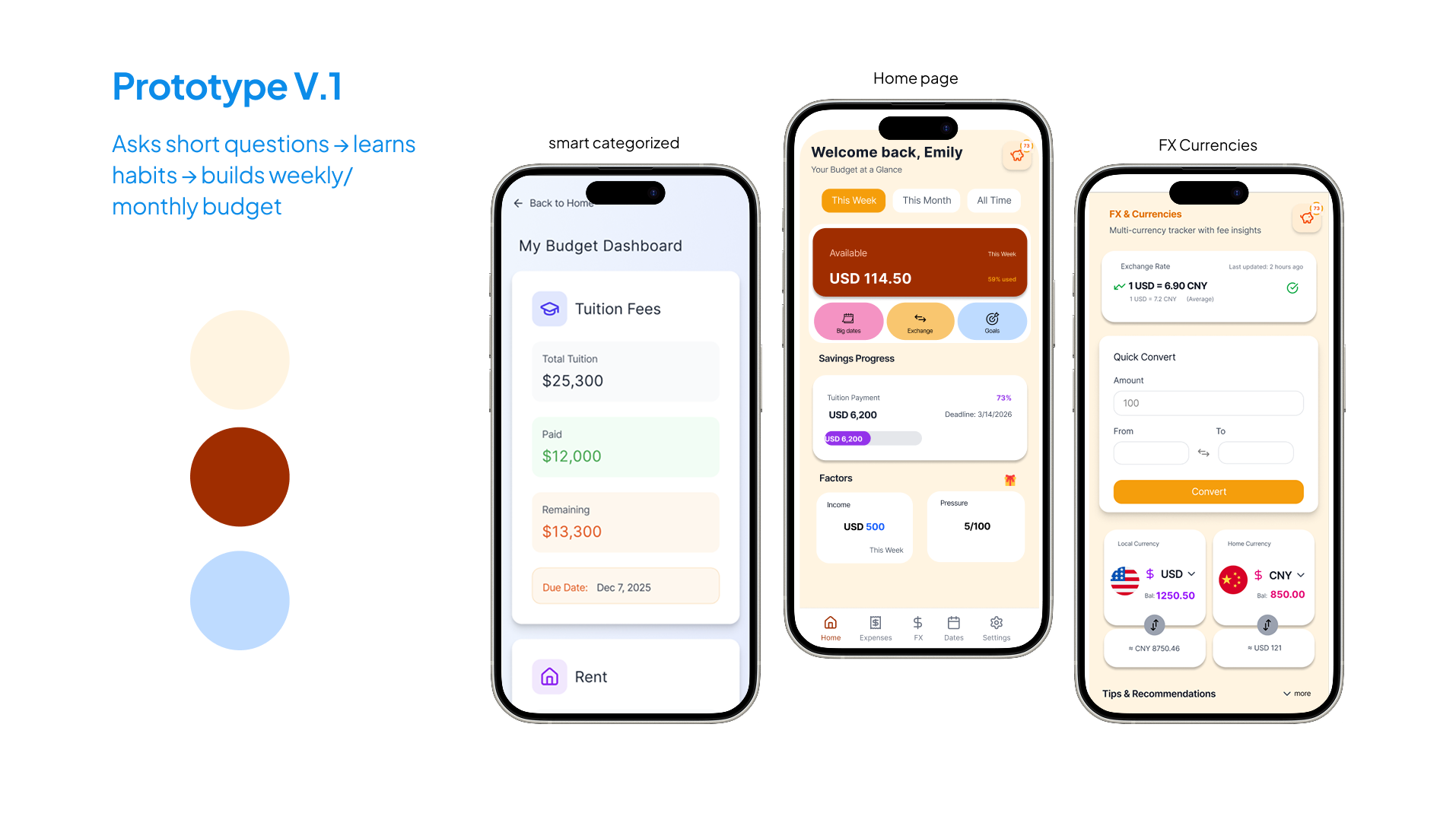
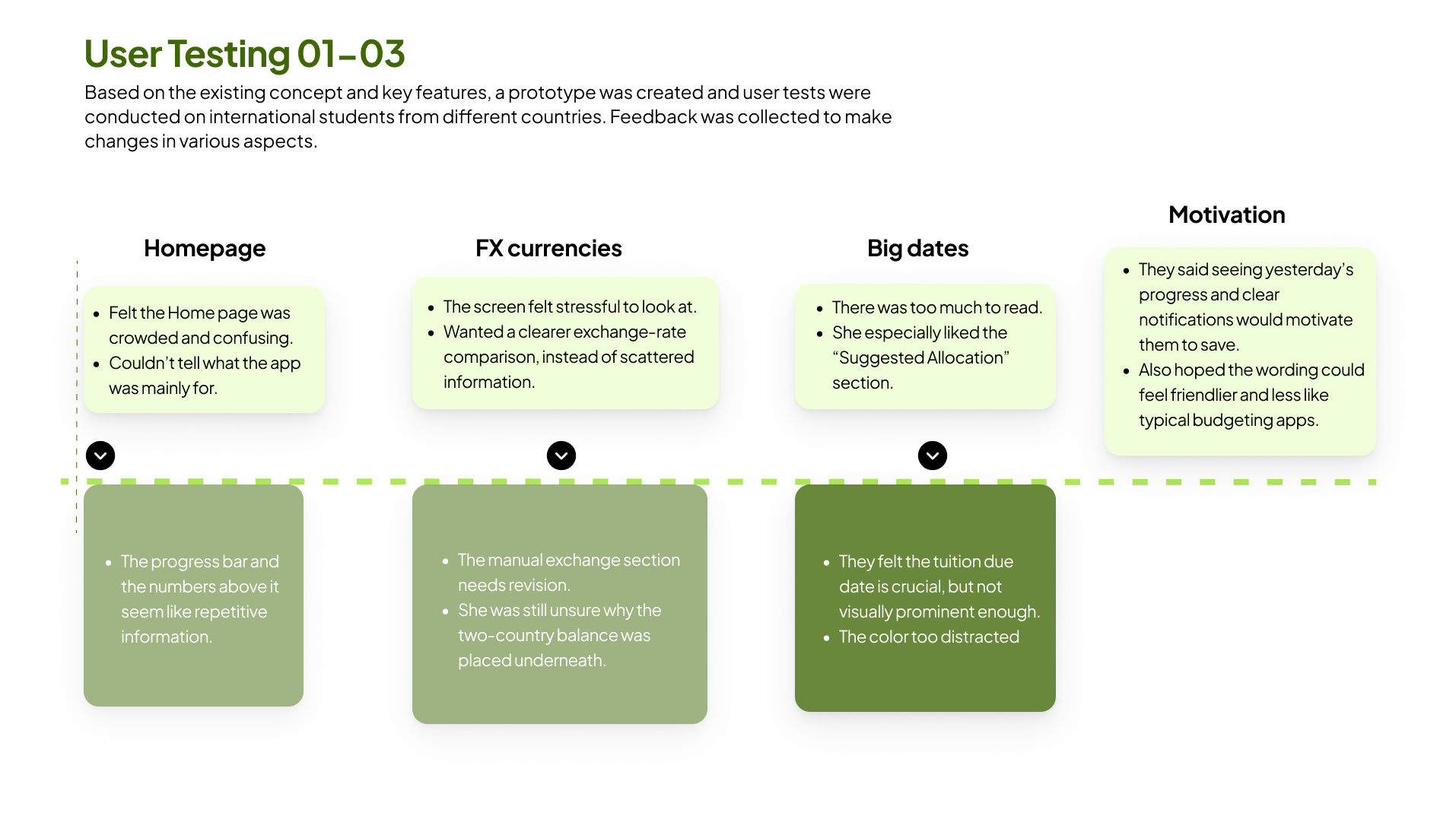
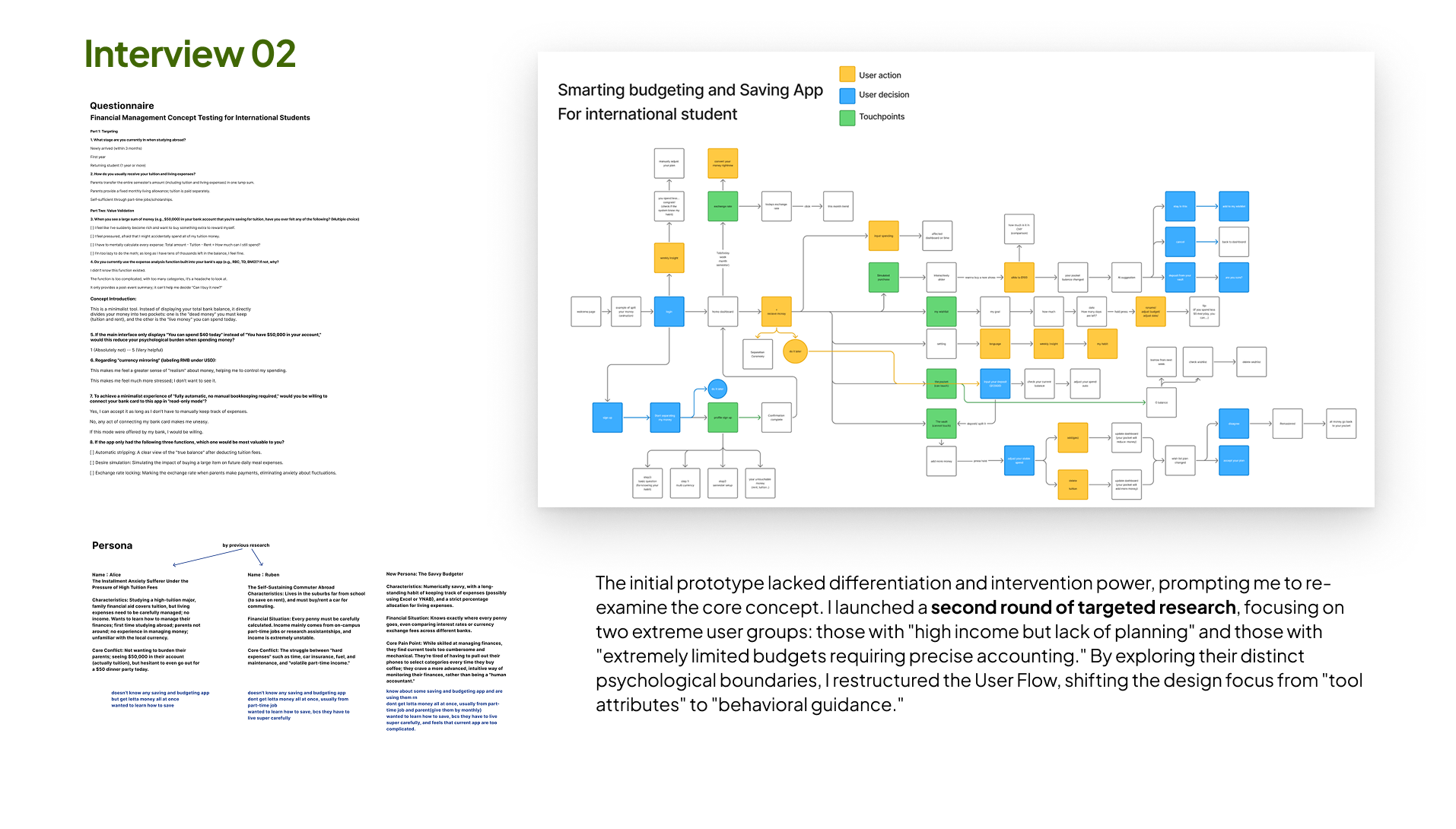
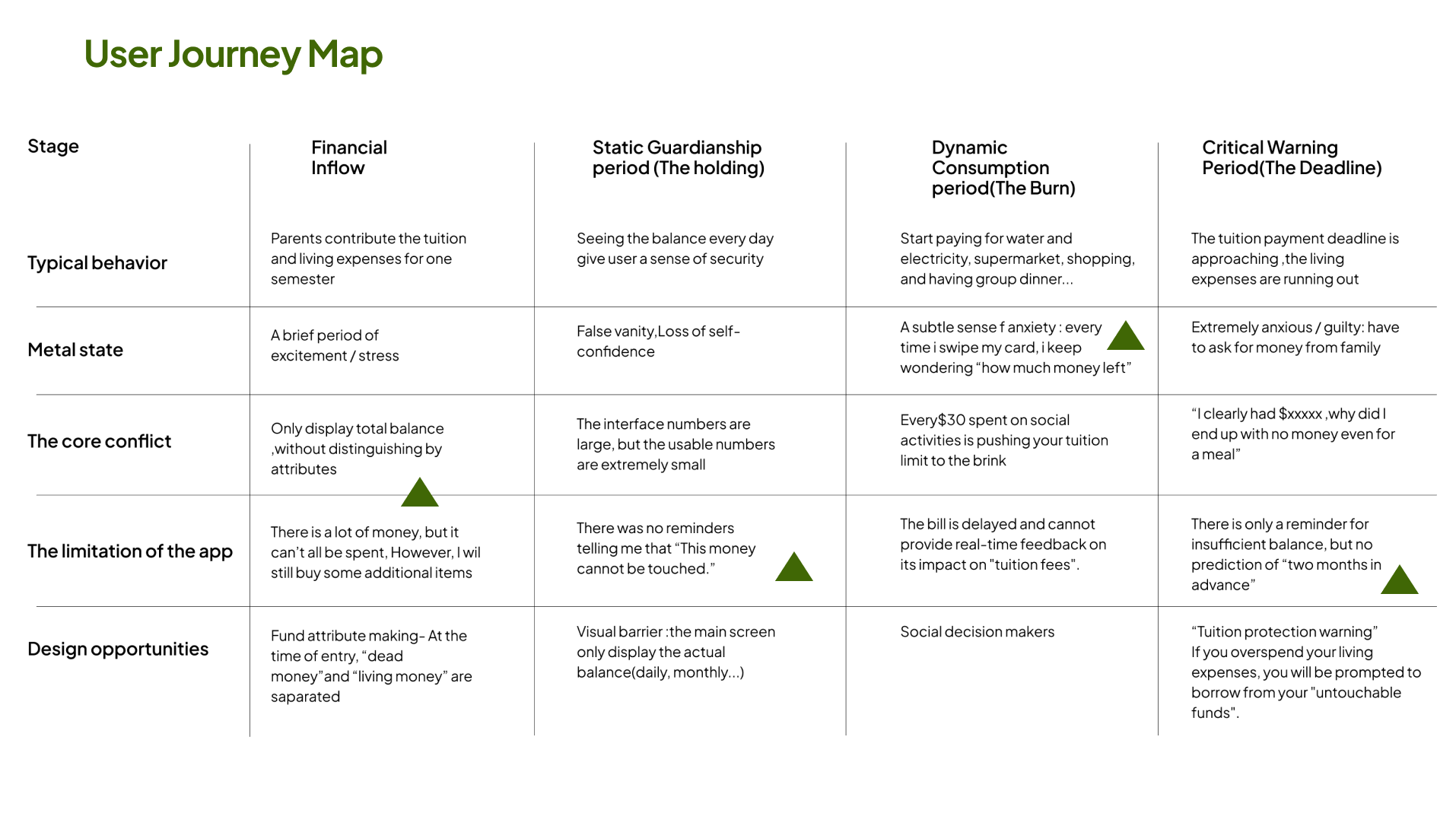
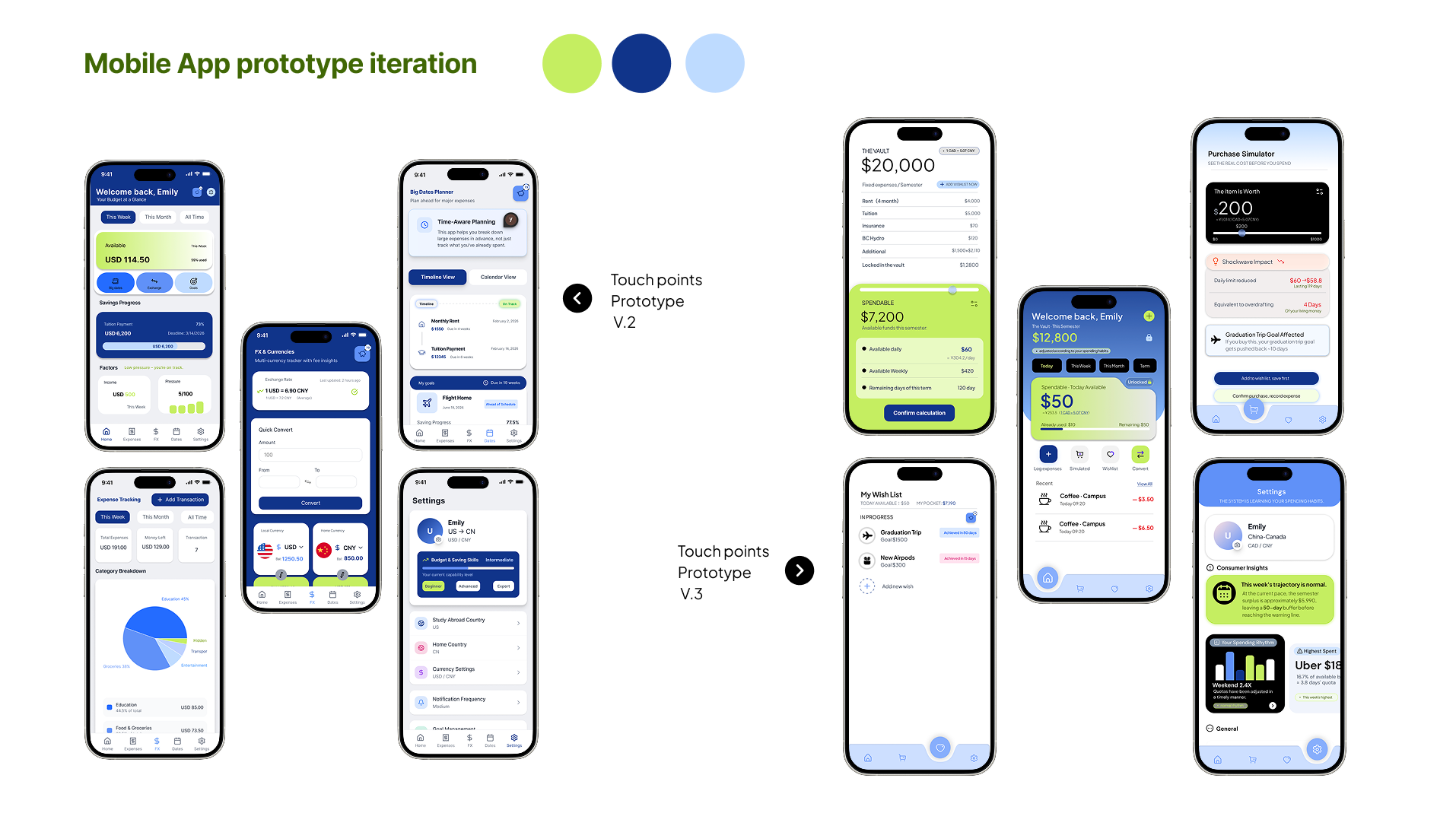
From conducting research to validate the systemic gaps in financial behavior, to ideating and iterating prototypes with constant feedback from diverse user groups. My process involved a continuous loop of testing and refinement—transforming initial behavioral hypotheses into a high-fidelity intervention framework that balances user autonomy with psychological security.
1-17 pages
Final Design — Features & UI Details
TAKEAWAYS
"My practice is an evolution from data logging to behavioural intervention."
“Financial anxiety often stems from an 'abstract total'—such as the illusion of $30,000—which creates a false sense of wealth. To bridge this gap, I developed 'Vaults' and 'hypothetical scenario simulators.' These transform data into actionable outcomes, helping students address their financial realities with clarity and control."
The Systemic Logic of Addressing the "False Sense of Affection"
"Total account balance" is a highly deceptive abstract number. For those undergoing life transitions (such as international students or startup founders), this ambiguity is the root of financial anxiety. The underlying logic for achieving financial well-being is "boundaryization". By physically isolating funds into "protected capital" and "daily liquidity variables," designs are created that simplify complex financial decisions into intuitive, sensory feedback, thereby ensuring the achievement of long-term goals.